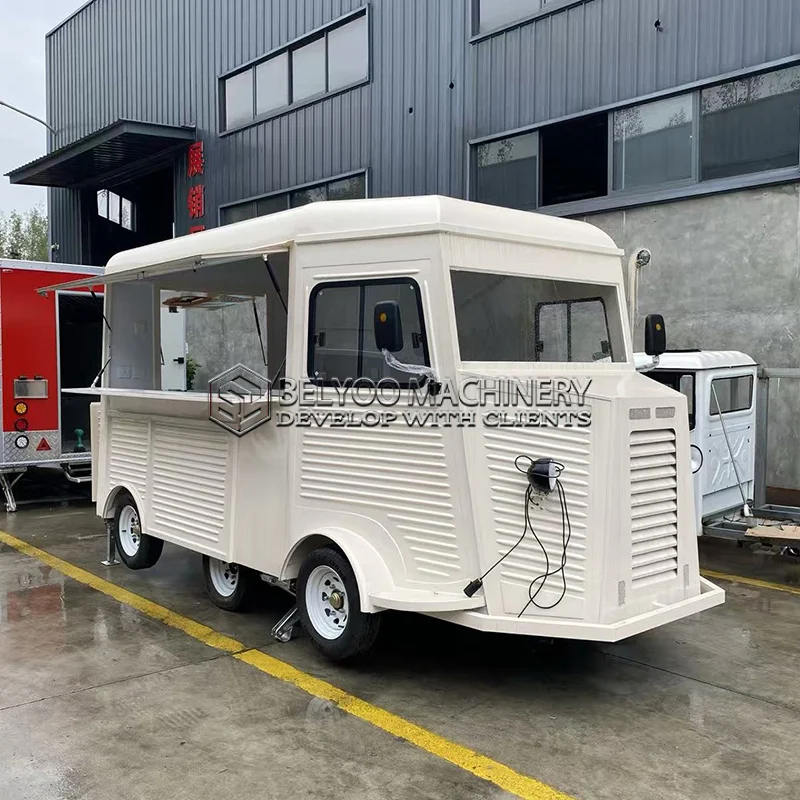
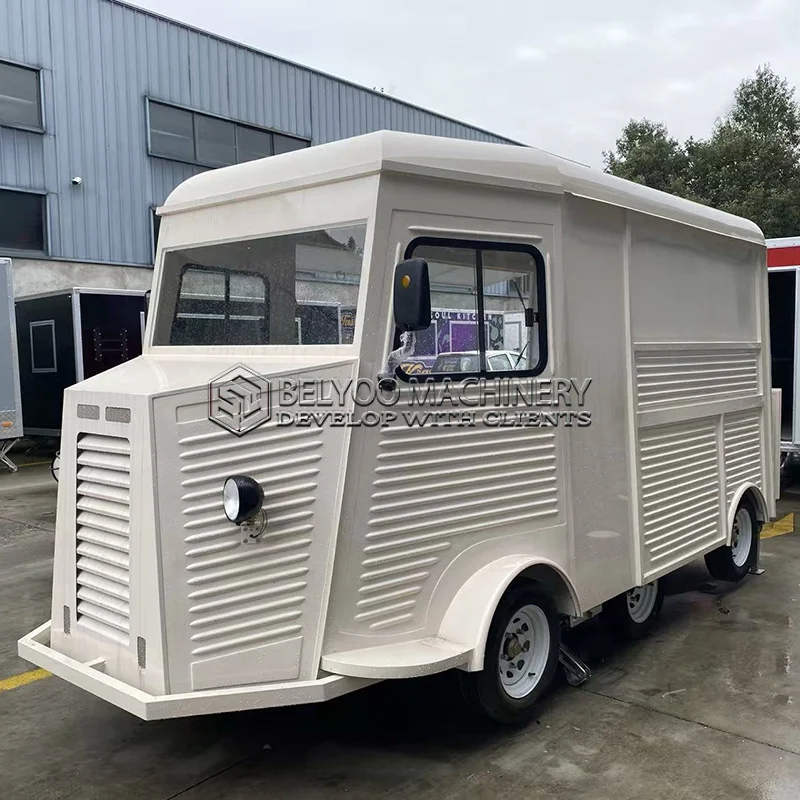
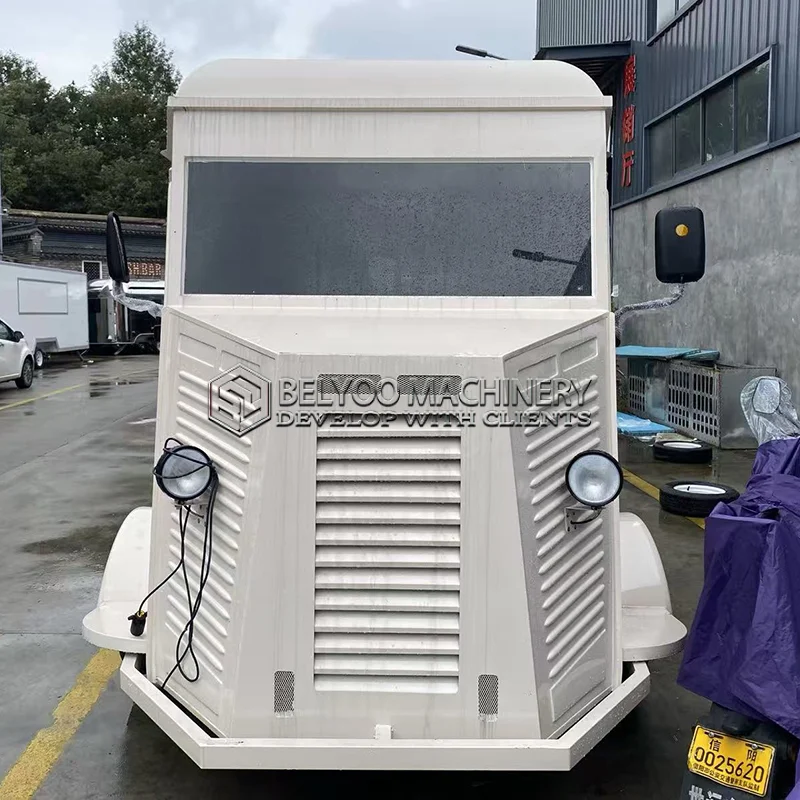
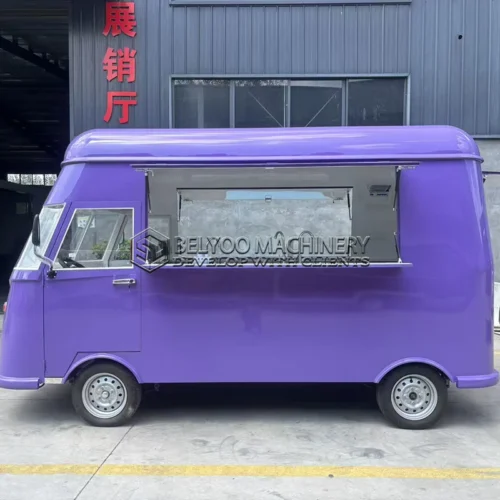
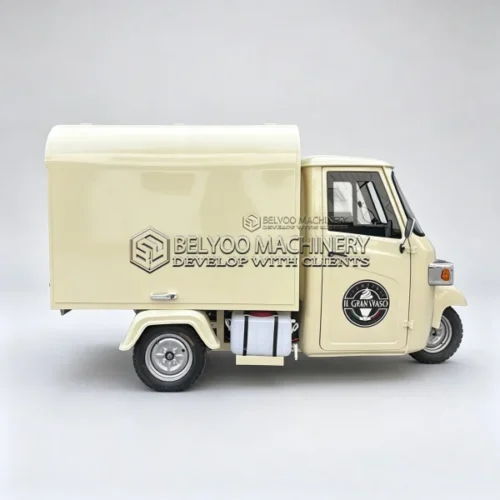
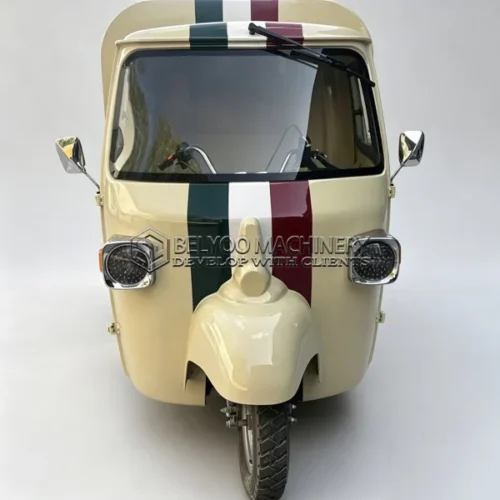
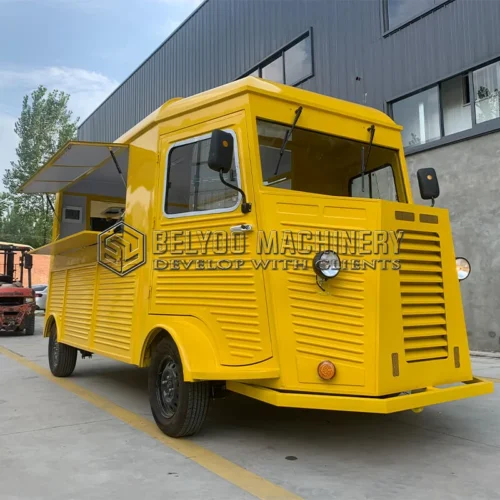
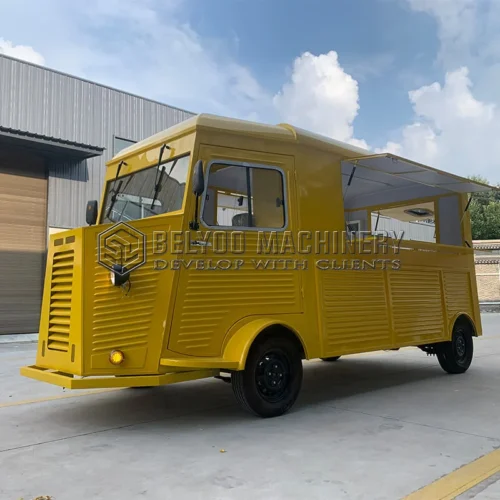
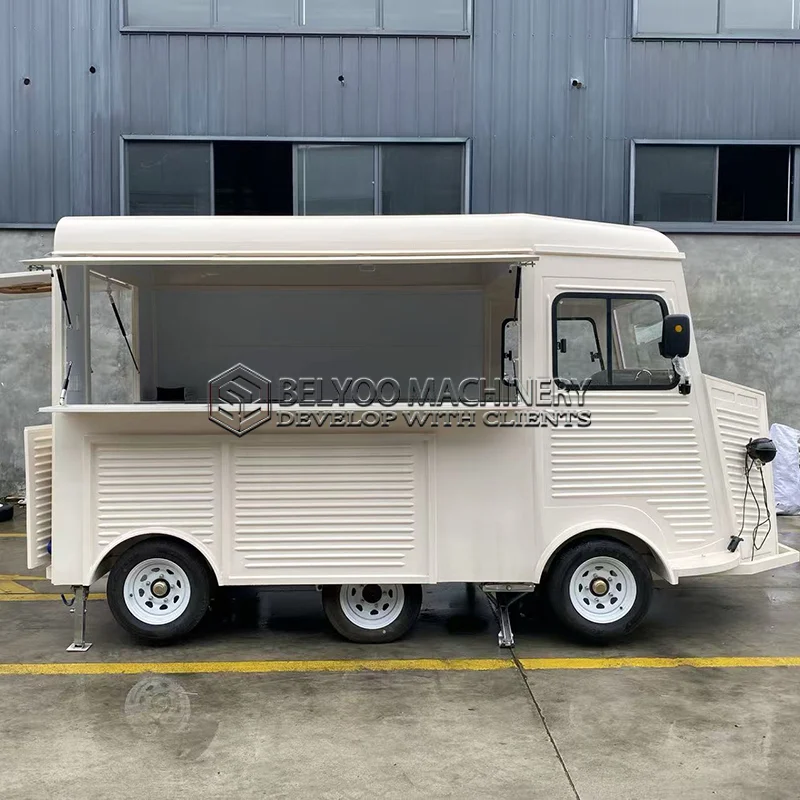
White Electric Food Truck

Overall dimensions (L×W×H): Built to order; confirmed on the production drawing

Body type: A self-powered electric drive unit

Body material: Stainless Steel or Galvanized Sheet

Sink station: 3+1 Sink or Double Sinks

Approx. unit weight: 950Kg

Color: Red, Black, Yellow, Green, Brown, Customized

Standard electrics: 110 V / 3.6 kW or 220 V / 7.5 kW supply

Sockets: Six sockets on bodies up to 4 m, eight above 4 m

Certification set: CE / DOT / VIN / UL / NSF

Brakes: Mechanical and hand brake; overrun or electric brake options

Description

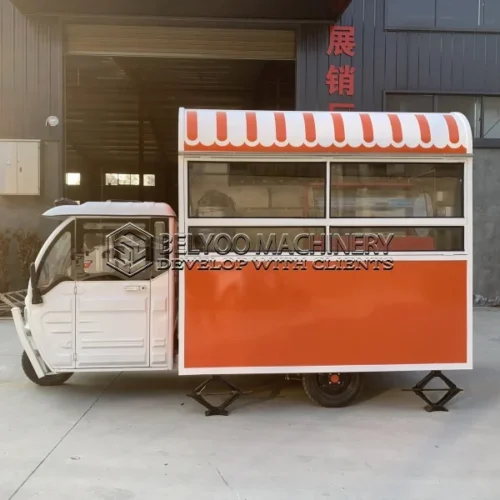
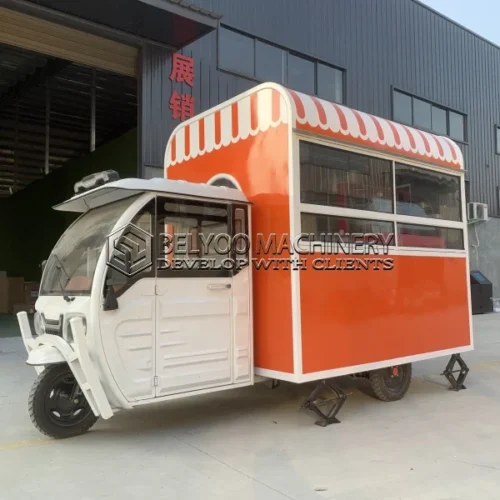
This white electric food truck is one of the more adaptable units in our electric food truck range. You get a working platform in white with the internal layout drawn to your equipment list.

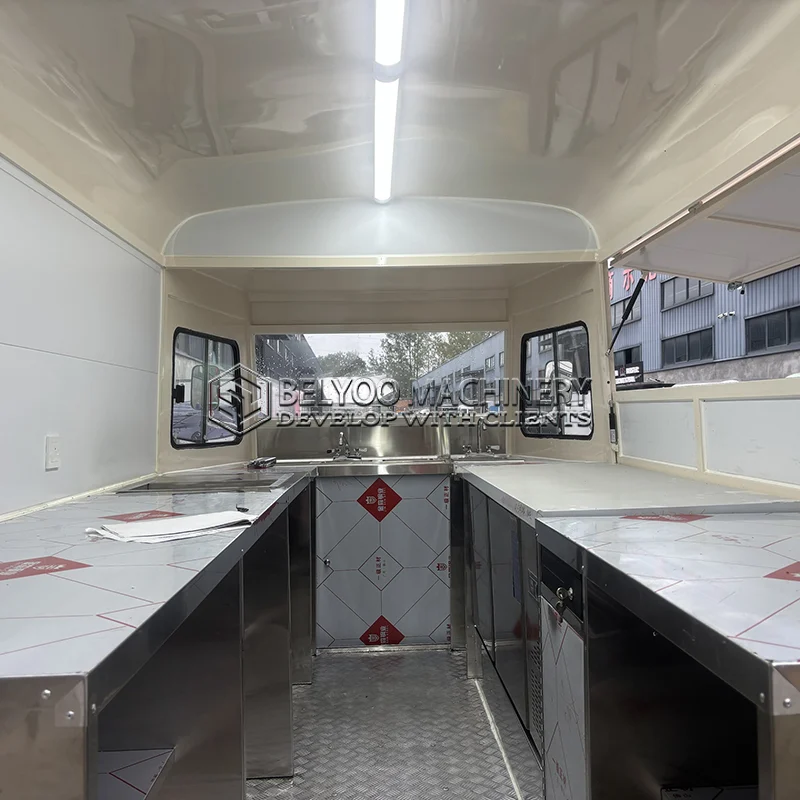
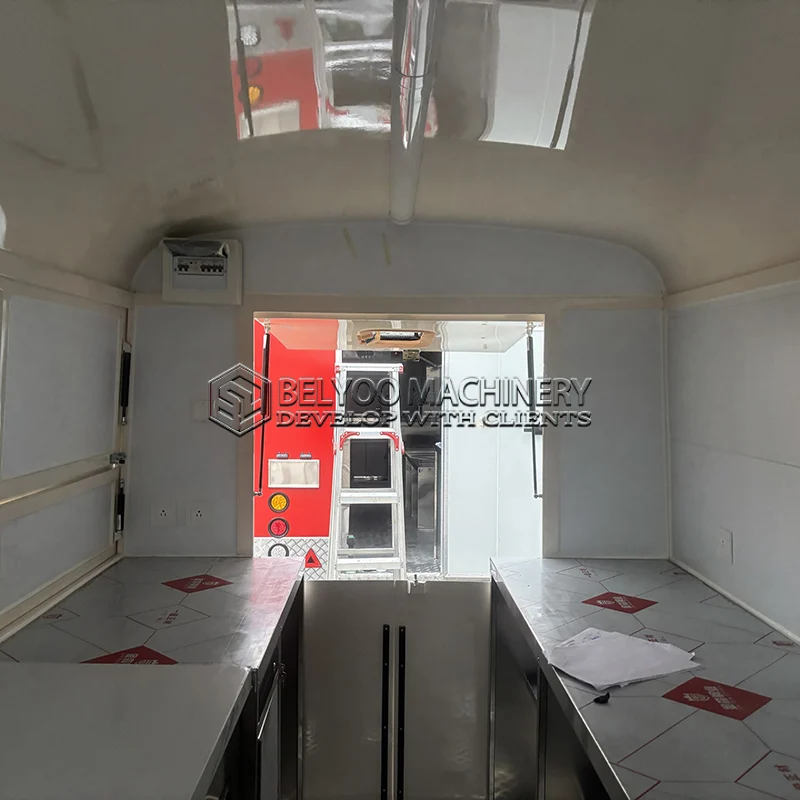
The working layout of this electric food truck

The internal layout is drawn around your equipment list: cooking line on one side, prep and storage on the other, and a clear path to the serving window.

The White Electric Food Truck is dimensioned on the production drawing rather than taken from a fixed stock size, so the figures follow your final specification.

Specified for street food service

Good trailer kitchens feel boring to work in, in the best way: everything has a place, nothing needs moving mid-service, and cleaning is straightforward.

  • a sink station with a separate hand-wash section
  • a serving shelf and condiment rail at the window
  • a prep and plating counter with under-cabinet storage
  • a griddle and fryer line with a stainless backsplash

We normally start the drawing with the heaviest appliance and work outwards, because its weight and heat decide where everything else can go.

Thinking about a first catering business?

New operators often underestimate how much the drawing stage saves them. We walk through equipment, services and workflow before anything is fabricated, which is far cheaper than altering a finished unit.

What can be changed before production

Most buyers change at least one thing on this base model: a different window arrangement, an awning over the serving side, a wider or taller body, upgraded axles and wheels, extra sockets or a heavier circuit, and interior finishes such as stainless drawers, wood-grain panels or vinyl flooring. The complete add-on list sits in the Options & Upgrades tab.

Construction details that matter

Axle choice is not guesswork: it follows the calculated weight of your equipment, water and stock. Route conditions decide the axle rating and tyre specification; send the typical journey.

Body construction uses stainless steel or galvanized sheet with an insulated panel build, so the interior can be cleaned down and holds temperature around refrigeration and cooking equipment.

Send us the certification checklist from your importer or local authority and we will answer it line by line, including NSF and UL items where they apply.

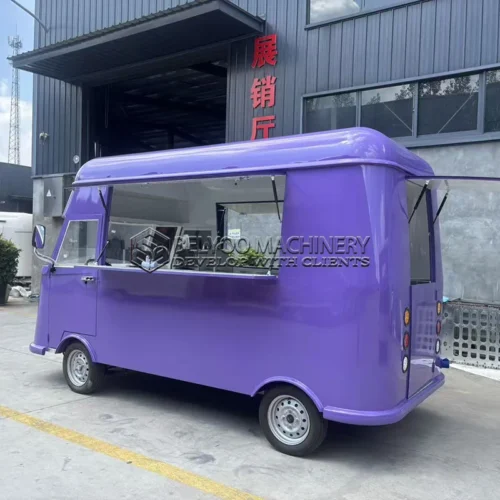
Buyers looking at the White Electric Food Truck often also consider the Yellow Electric Food Trucks for Events and Festivals; the useful difference to check is body style and serving layout, not just the colour.

Production time and delivery

We quote production as a 30-45 day window rather than a fixed date, because custom fabrication depends on the options you choose.

Share the number of staff and the menu range, and the internal layout is proposed before pricing.

Standard equipment for this electric food truck

  • a prep and plating counter with under-cabinet storage
  • a serving shelf and condiment rail at the window
  • fresh and waste water tanks with a separate hand-wash route
  • interior lighting, distribution board and accessible cable runs
  • one large service window or two smaller windows
  • stainless worktop and prep area with a sink and water pump
  • a sink station with a separate hand-wash section
  • a griddle and fryer line with a stainless backsplash

Wheels and tyres

  • steel or alloy rims from 13 to 15 inch
  • tyres with a higher load rating, supplied per axle set
  • tyre choice matched to your route and towing weight

Interior finishes

  • solid wood counter, wood-grain interior or wallpaper
  • cabinet rework; stainless drawers and pull-out bin base
  • vinyl flooring and pizza oven installation, with or without a base
  • crystal-carbon or marble-look wall panels, excluding curved and door faces

Crating and freight

  • crate-only supply or crated delivery to a named port
  • a loading plan based on the finished unit

Body and window options

  • camper door lock and alloy wheel arch
  • a manual or electric awning, with body reinforcement where needed
  • an extra service door and sliding windows in either direction
  • additional serving windows, including folding and three-fold styles
  • bumper trim styles on the rounded shell

Electrical

  • UL or CE certified wiring in heavier gauges
  • a dual circuit or three-phase supply
  • extra sockets; ETL shore-power inlet

Chassis, axles and brakes

  • jockey wheel upgrade in two load ratings
  • additional axle; 2 t coupling with overrun brake
  • leaf-spring or torsion axles matched to the build weight
  • a heavier chassis rating and electric-brake torsion axles
  • hand-pull version without axles, wheels and jack

Size changes

  • a wider, taller or longer body
  • dimension changes confirmed against towing limits and container loading

Production window

The usual window is 30-45 days from a signed drawing, including photo reporting during fabrication and a recorded inspection before crating.

Shipping

  • secure timber crate with chassis restraints
  • container quantities worked out from the finished size
  • crated delivery to your chosen port

Paperwork

  • identification plate and chassis documentation
  • certificates required for your destination
  • documents supplied before the container arrives

What happens after delivery

  • build-sheet warranty with named covered components
  • clear separation between warranty parts and wear items
  • remote assistance for wiring, water and window adjustments
  • consolidated spare-part shipments on request
Go to Top