A Shop You Can Tow, and a Warehouse Too
What she sells
She does not sell a cup of matcha. She sells a shop that can stop wherever the crowd is.
The business is matcha and dessert in Honolulu: matcha latte, matcha cake, seasonal specials. This is a port city, so the traffic follows the cruise ships and the weekend markets. On a good day it is shoulder to shoulder; the rest of the week the street is quiet.
A fixed shop means rent locked into the most expensive corner of town while the season lasts only a few months. Stock was the second problem: matcha powder fears light and moisture, and cups, packaging and sealing film all need somewhere to live. In a small shop the stock ends up on the prep counter and nobody can turn around.
So she was not shopping for a food truck. She was shopping for space that follows the crowd and still holds the inventory.
What fits inside 6 m
The zoning was worked backwards from the need: decide which part holds stock, which part holds people, and which part faces the street, and only then talk equipment and styling.
2.0 m: storage
- Three-tier shelving for cartons, prepped ingredients and packaging
- Stock replenished weekly, kept off the counter
- Side loading door with checker-plate finish
1.8 m: prep and water
- 3 plus 1 sink set against the inner wall
- 50 L fresh and 75 L waste tanks, separate runs
- Hot and cold mixer tap, aluminium checker-plate floor
1.9 m: the window
- 600 mm deep stainless counter
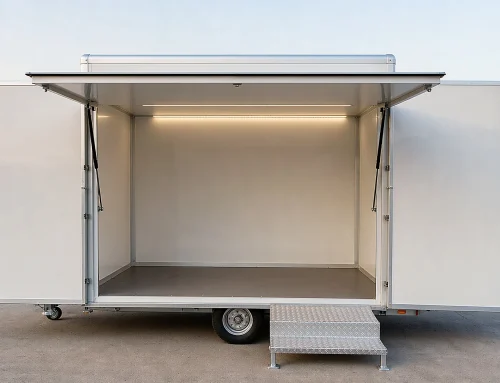
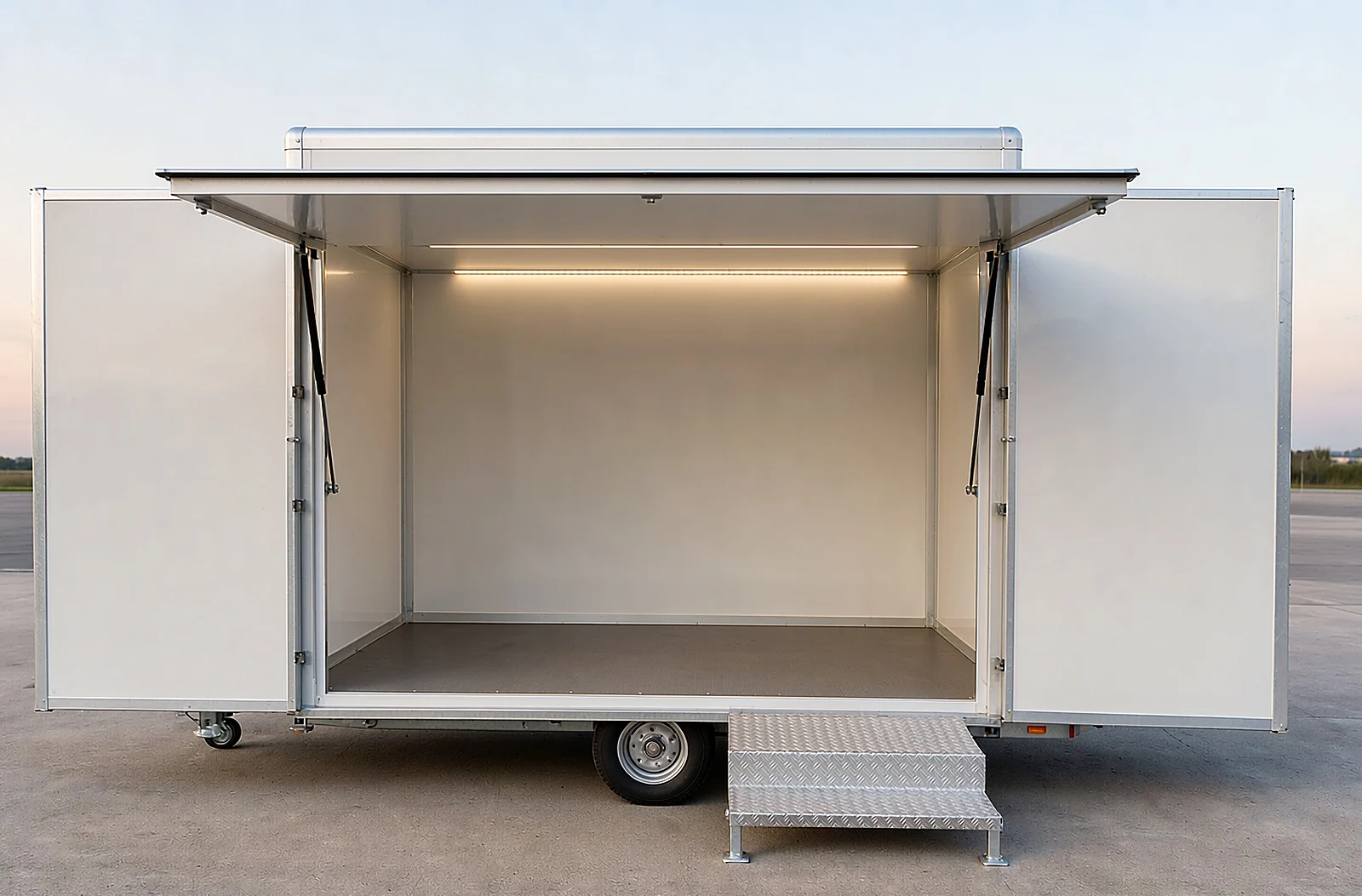
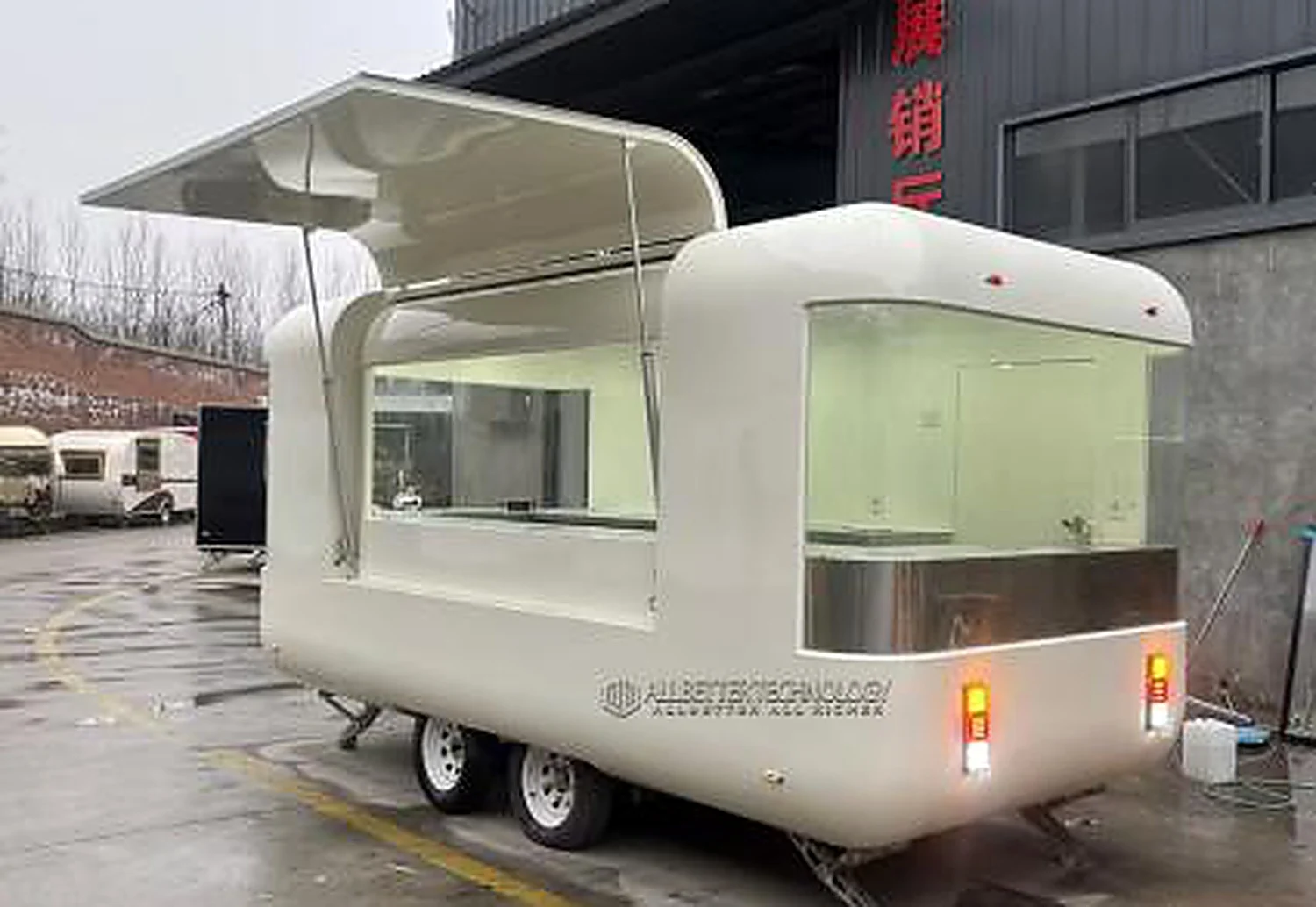
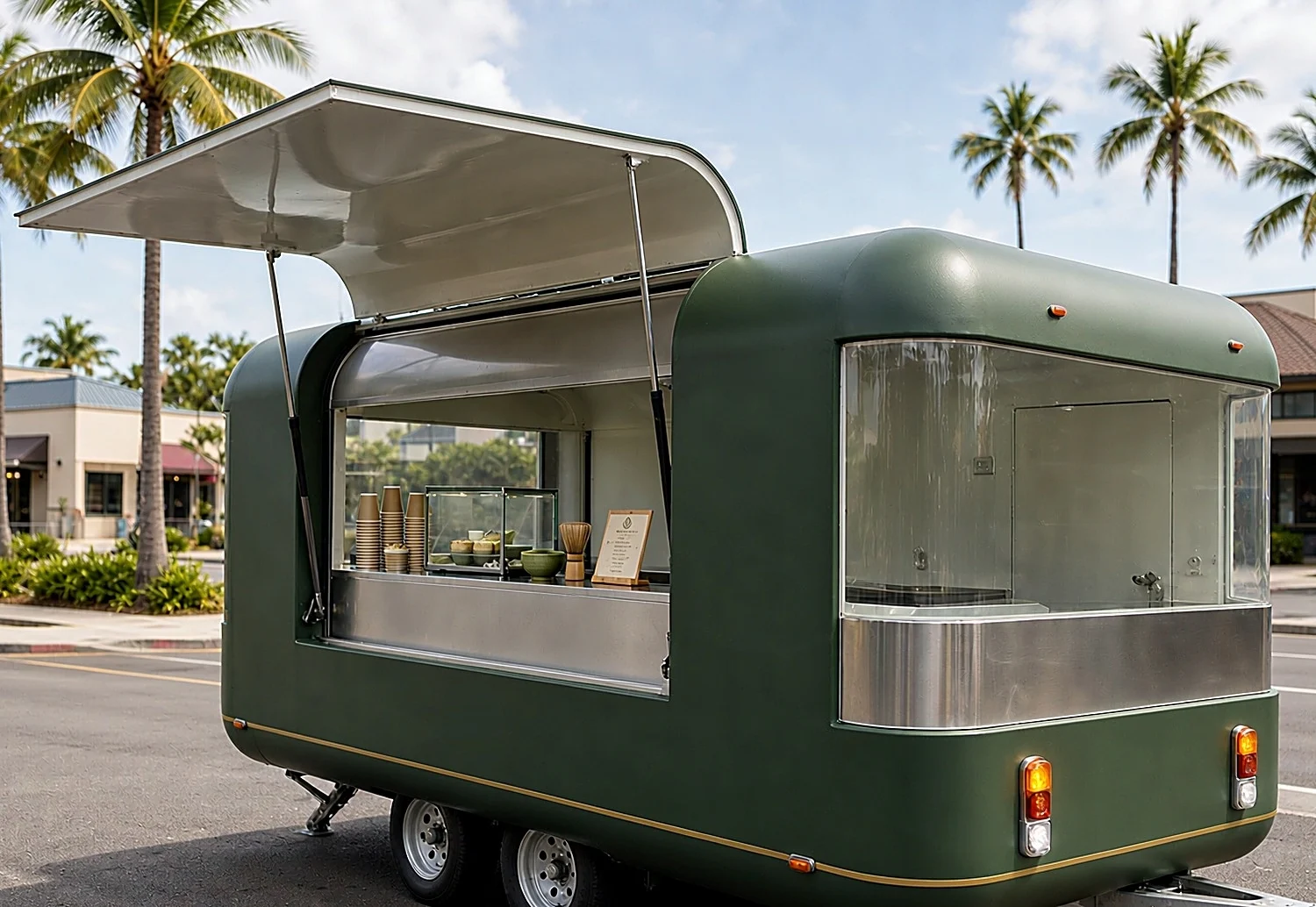
- 3.5 m full-width flip-up window, the pane becomes the counter
- Cash drawer and water within arm’s reach
One floor, three jobs
- Morning: stock in through the side door, first in first out
- Midday to evening: window up, counter open, cash and water at hand
- Night: window down, the trailer is a warehouse again
Window up in business, window down after close: one trailer with two faces.
From a white body to her shop
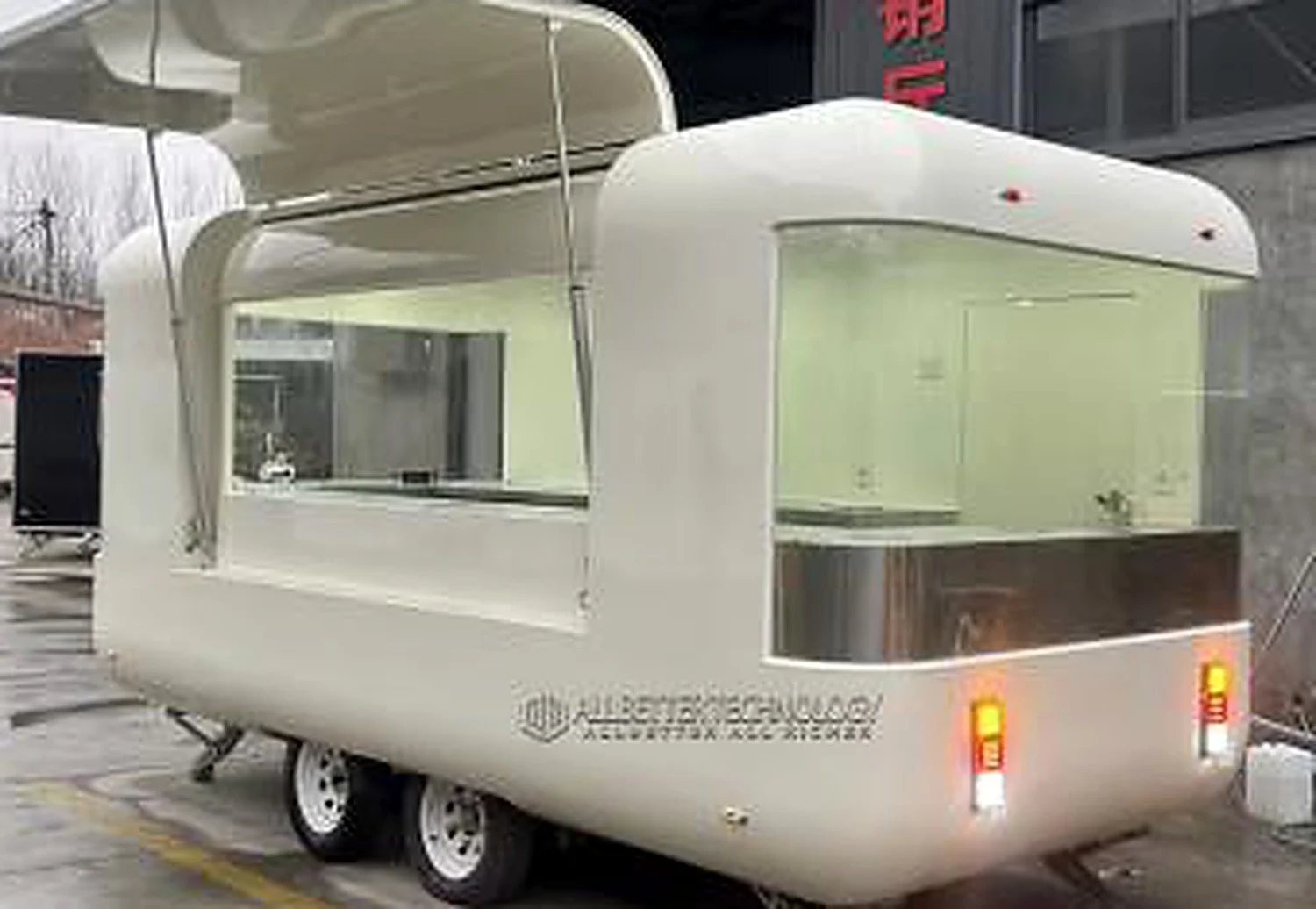
It leaves the factory as a white trailer. Paint, wrap and light strip, and only then does it become the shop the client wanted.
- Paint. RAL 6035 pearl green metallic, fine grain under light, darker by day and greener at night.
- Wrap. Her own artwork: deep green field, gold leaf line, logo above the skirt at eye level.
- Light. Warm-white LED strip along the window edge, so the window is lit before the street goes dark.
The gold line is the one thing we never change: it runs the whole 6 m and ties the body together, so from across the street it still reads as one trailer and not a shed. The light strip comes last and is the most overlooked step: markets empty out after dark, and the trailer with a lit window is the only shop still open on the block.
Water and floor: three questions at inspection
A stall inspection asks three things: where the water comes from, where the waste goes, and whether there is a floor drain.
A dessert shop gets questioned about the sink more than anything else: a cup of matcha uses a cup, a spoon and a whisk bowl, and the washing adds up. Three bowls for washing, the fourth dedicated to hands, and the inspector passes it at a glance. Fresh water is onboard, waste goes into its own tank, and the stall needs nothing but flat ground.
Power: one question from the site
On US markets and piers the electrician checks two things first: whether the harness is UL listed and whether the inlet is ETL. With those in place, the conversation moves on to which socket to use.
Distribution
- 8 x 110V outlets: blender and sealer on the prep side, POS and light strip at the window, one for a dehumidifier in storage
- Breaker box with three circuits, a fault trips one line, not the whole trailer
- One main switch at close, no re-plugging every morning
Connection and road lights
- ETL external power inlet, one 110V supply carries the trailer
- Trailer light connector travels with the unit: brake, reverse, turn and plate lights
- Compliant to tow the moment it leaves the yard
Tows away, and stands still
Body and running gear
- 6000 x 2000 x 2350 mm, about 20 x 6.6 x 7.7 ft
- Tandem axle, 165/70R13, a size any tyre shop on the island carries
- A-frame drawbar with ball coupler, one pickup can tow it
Parking and interior
- 4 AGCO jacks, adjustable at every corner
- Stainless counter and cabinets, aluminium checker-plate floor, warm-white LED strip
The four jacks are not decoration. A 6 m body on two axles will lift at the nose once parked; the jacks level all four corners so the window can be raised and a customer can lean on the counter without the body rocking. The tyre choice matters more than any spec sheet number here: island supply lines are slow, and a common pickup size can be replaced anywhere.
From 19 May to Honolulu harbour
- Drawing sign-off. Drawings after deposit, locked once confirmed.
- Weekly production report. One progress photo every week.
- Factory acceptance. Power on, water pressure tested, photographed before the balance.
- Shipping. One unit goes LCL, and the booking is made early.
Honolulu is an island route: few sailings and tight space, so the booking is fixed before the production slot is planned. After arrival, clearance, tow away, four jacks down, and the window opens the next morning.
Belyoo / Mobile retail cases
The trailer is the shell. The location is the business.
Tell us what you sell, how much stock you carry and where you park. We will lay out the 6 m around that.