Half a Griddle, Half a Window
What he sells
With hot street food, the first question is whether the truck can cook it on the spot.
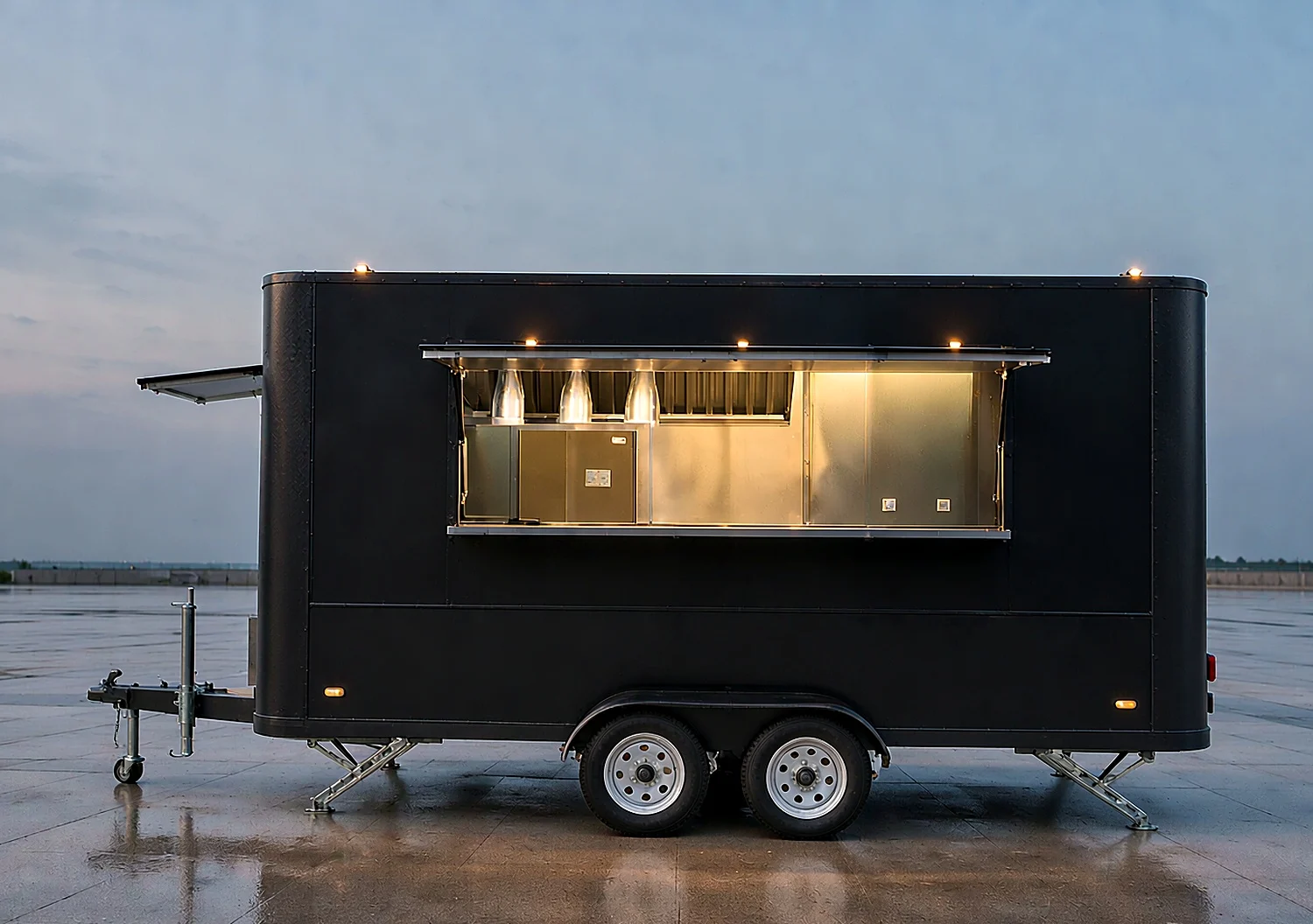
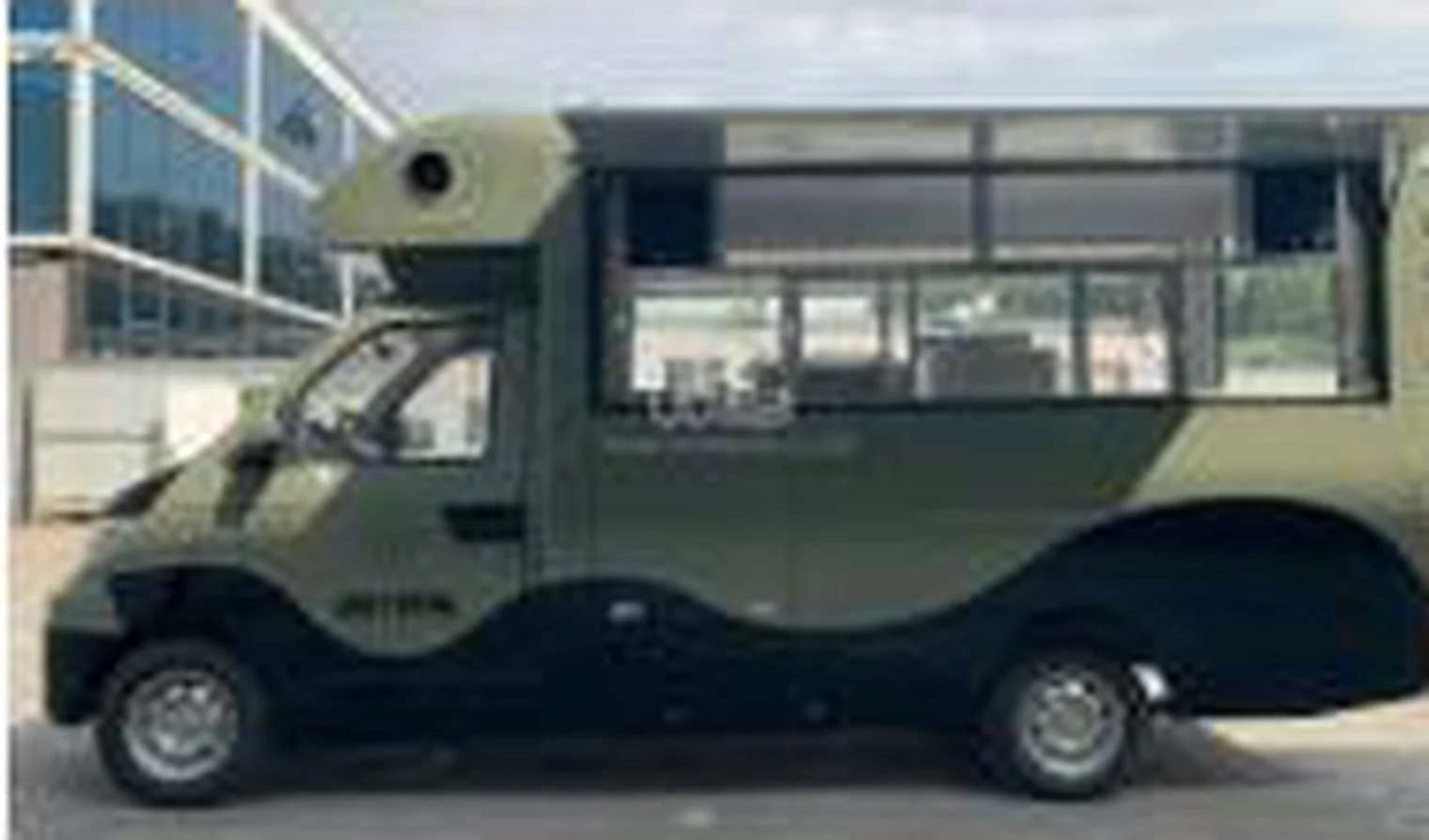
The buyer is in Long Beach, California, and ordered a 4.9 m Foton box truck, model ABFT-490: body 4900 x 1600 x 2500 mm, no seating inside, only two things, a counter that keeps serving and a window that opens onto the street.
The menu is built on the griddle: meat, egg, pancakes and onion, all of it ready in minutes and eaten from the hand. So there is one main machine in the truck, a gas griddle, and the rest of the space goes to prep, washing and bagging.
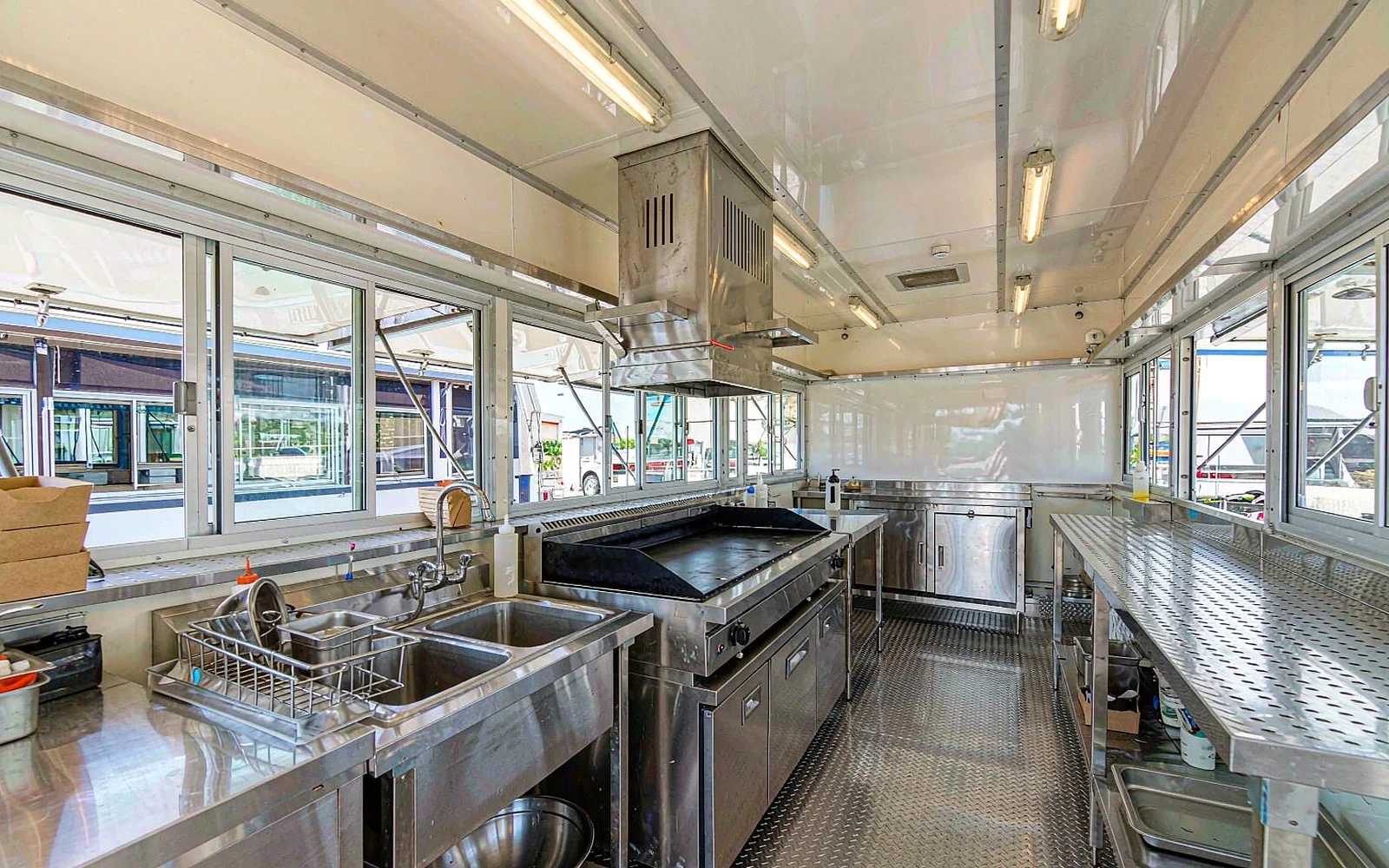
Five constraints set the layout: a griddle that keeps up with a queue, so gas direct flame rather than electric; counter space for both prep and packaging, so one continuous run down each side; washing that does not mean going back to a shop, so a three-bowl sink on board; a floor that can be hosed after closing; and light that lasts past sunset.
Laying out 4.9 m
On a 4900 x 1600 mm floor, a counter runs down each side with a single-person aisle between them. Stock comes in at the rear, food goes out at the front window, and cleaning and cooking each take their own side, so people and goods never share a line.
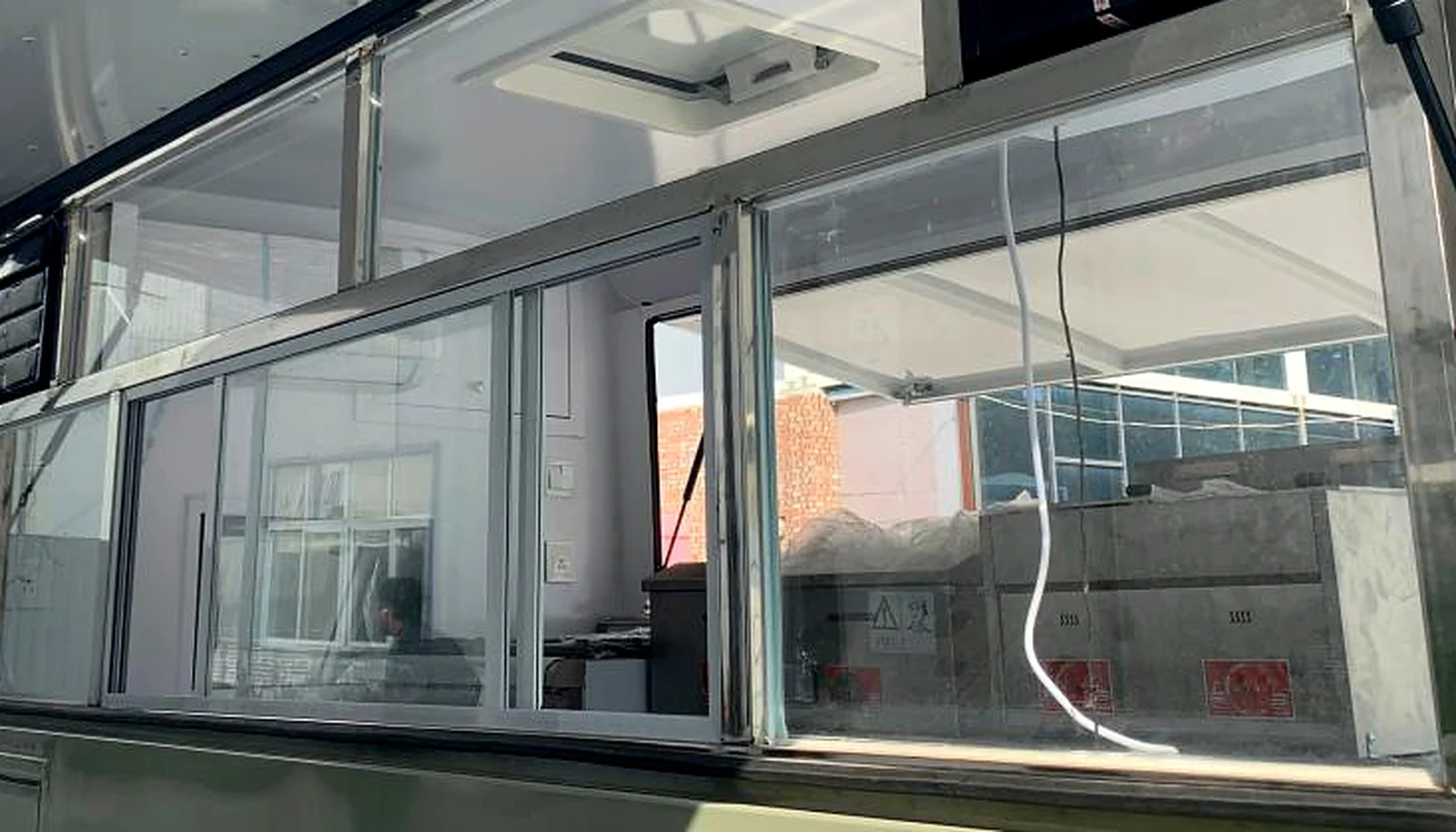
- Window on the long side, on the same edge as the counter. Customers stand on the pavement and take the food with one reach; restocking goes through the rear and the two flows never meet.
- Prep before opening. Tanks filled, gas bottle connected, griddle warmed, ingredients up on the counter and packaging below it.
- During service. One person works the griddle, one bags and takes cash at the window, and the sink keeps the crockery turning.
- After closing. Gas off, external power unplugged, griddle scraped, floor drained and hosed, waste taken off the truck.
The aisle is only one person wide because inside the truck only one person needs to turn around.
The griddle, and the window facing the street
There is one main machine: a gas griddle, 550 x 460 x 300 mm, inset flush into the counter so a finished order slides straight toward the window. Four to six portions go down on the plate at once.
Gas rather than electric is a deliberate choice. The external supply is usually single phase, and an electric griddle heats slowly and cannot hold peak demand; direct flame is hot within seconds and does not lose temperature when plate after plate goes on. The gas line runs on its own, with the connection below the counter, so servicing and bottle changes never mean dismantling the worktop.
Window assembly
- Sliding panes, opened fully the counter faces the street, half open it becomes a serving hatch
- Awnings on lift struts, shading sun and blocking rain
- Two fans along the window head, extracting heat and fumes outward, so the cabin stays breathable
One order in four steps
- Portions pre-divided into trays, laid across the plate in one pass
- Turn by colour, not by the clock
- Bag and sauce, handed straight out of the window
- Scrape the plate, top up oil, start the next round
Water onboard, power from one cable
The truck does not depend on the site. Water travels with it and electricity comes in on one cable. Find somewhere to park, plug in, and the griddle can be lit.
Water
- Fresh and waste tanks, one each, tucked under the upper counter
- 12 V pump pressurising the 3 plus 1 sink, instant hot tap on demand
- Wash, rinse and sanitise in sequence without returning to a shop
Power, floor and gas
- External inlet into a distribution box with split breakers: lighting, sockets and pump on separate circuits, so a trip is easy to trace
- LED lighting across the whole body, so closing does not happen in the dark
- Anti-slip checker-plate floor with a centred drain and fall from front to rear
- Gas line run on its own to the griddle, connection point below the counter
Electrics are deliberately kept simple: no high-draw electric cooking, so lighting, sockets and pump run off one supply that a small generator or a site socket can carry. Adding equipment later starts with a load calculation, not with pulling a cable on site.
Before shipment the water and power are tested: tanks filled, pump running, taps flowing, drain checked for back-smell, then power connected, every light and socket verified and each breaker tripped and reset. A video goes to the client for sign-off before shipping is booked.
Colour, picked off a card
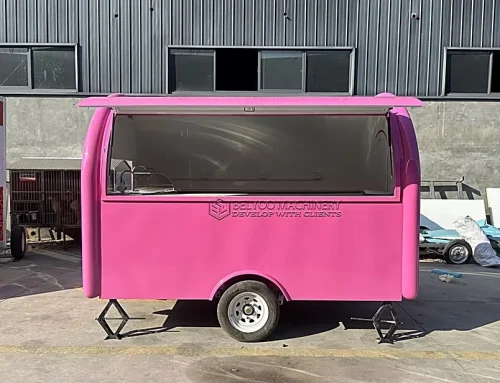
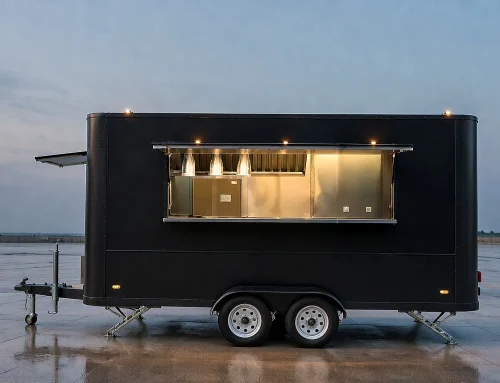
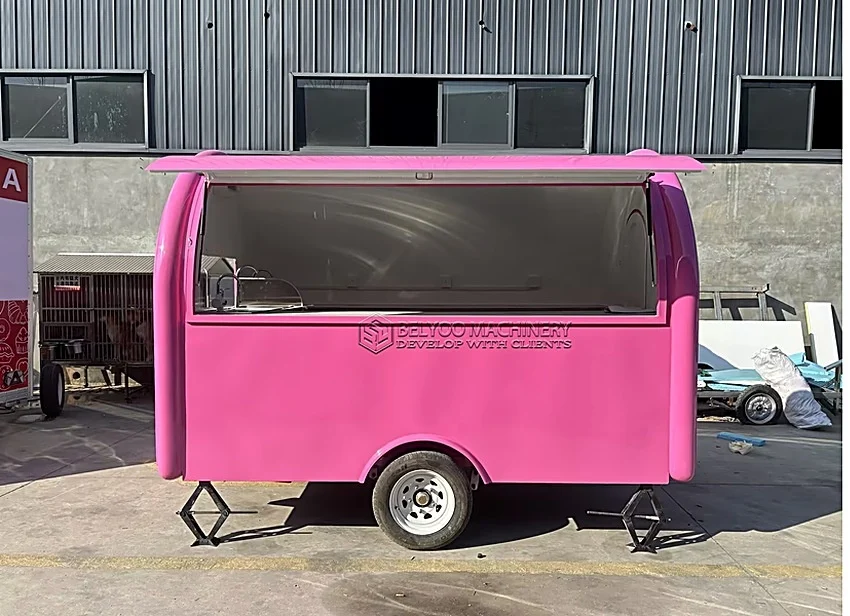
Colour is the one thing a client can change without changing a single machine. This order stated it plainly: colour to preference. What we send is a colour card, not a set of renderings, so a RAL number goes in and that exact colour comes out.
Three surfaces get decided together: the body colour, the trim colour on window and door frames, and the contrast colour for signage and logo. The body holds the street, the trim draws the outline, and the signage has to be readable from ten metres out.
All of it is fixed at the drawing stage: the client names the colour, we mark the split lines on the drawing, which section is painted in the main colour, whether frames stay bare metal or go dark, which base colour the signboard takes. The paint shop mixes to the number, not to a description. When a client only has a reference photo, the nearest card is chosen and confirmed before the panel goes in.
Same production line, one different paint colour, and it is a different shop.
From Zhengzhou to Long Beach
- Drawing. Technical drawings within three working days of payment; work starts on confirmation and the drawing stops changing.
- Production. 35 working days depending on configuration, with photos during the build and video at key milestones.
- Trial run. Power, water and gas tested item by item, the whole truck filmed inside and out, client confirms remotely.
- Shipment. One 40HQ direct to Long Beach, timber frame, tyres, window panes and awnings braced separately, CI, PL and B/L travelling with the cargo.
A custom truck has two fears: that the drawing and the finished unit do not match, and that if something goes wrong nobody is reachable. Both are written into the contract: drawings within three working days, production with progress photos, factory testing with video sign-off, documents delivered with the shipment, twelve months warranty on manufacturing faults, and a clear statement that a built-to-order unit cannot be returned. None of it is complicated, but every clause maps to a moment the client can check from 10,000 km away.
Belyoo / Food truck cases
Half griddle, half window.
Tell us the menu and how many people you serve at peak. We will size the plate and the counter around it.