Two and a Half Metres, One Window onto the Street
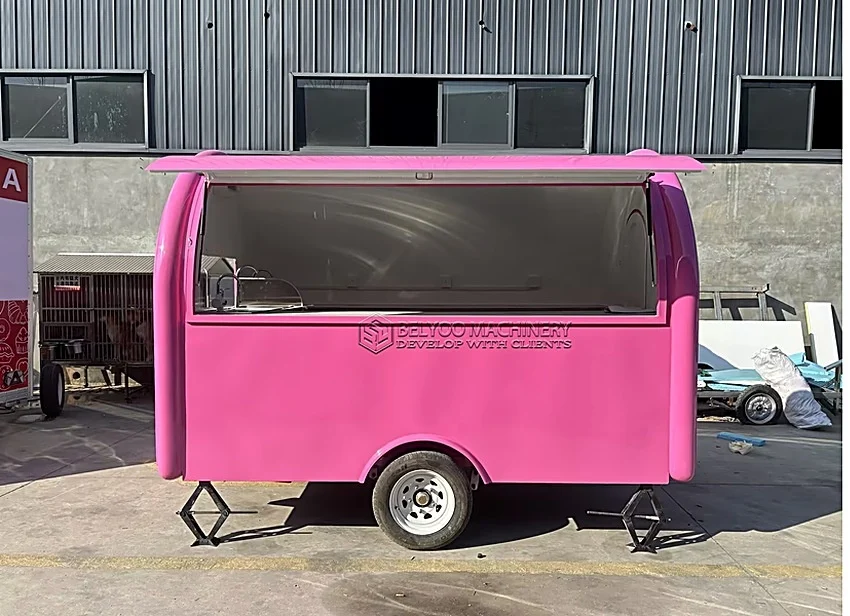
What he actually sells
He did not order a food trailer. He ordered a reason to be on the same street corner every morning at seven.
Houston summers are long and the sun is hard. Coffee here is not something people sit down for. At seven in the morning, outside office parking lots, on construction sites and at hospital shift changes, someone wants a cold cup that is handed over quickly.
That business has one condition: the operator has to stand at a window, not walk up and down inside. One person, one trailer, one window. Open at seven, close at two, and the trailer stays parked the rest of the day.
So the trailer does not need to be big. It needs to fit a parking bay, let one person turn around without stepping over anything, and start trading the moment the window goes up.

Two and a half metres, one straight line
Open the side door and there are two continuous counters with a 0.6 m aisle down the middle. Window side is for finishing and handing over; the inner side holds the machinery; the nose end carries the sink and the air conditioner. One person stands in the aisle and reaches both sides by turning.
- 2500 mm · window counter — 0.5 m deep, running the full length. Lids, sugar, card reader: ordering, handing over and taking money all on one line.
- 2500 mm · equipment counter — espresso machine and grinder set against the window line with the controls facing the aisle; fridge below, one turn away.
- 1600 mm · water and cooling — 3+1 sink at the nose end with the wall-mounted air conditioner above it, so washing and cooling sit at the far end and never cross the serving line.
The same 2.5 x 1.6 m floor takes three jobs in one day: loading at 06:00 from the side door, with milk in one fridge compartment and ice cream in the other; trading from 07:00 to 14:00 with the window up as a counter and the drawer open; and closing after 14:00, when the window goes down, the trailer becomes a store, the waste tank is emptied and the counters are wiped.
Two and a half metres sounds small. For one person trading alone, a short walk is the specification.
The coffee half of the trailer
The equipment list was written backwards from the menu: americano, latte, iced drinks, one small food item. That menu only needs four things on board. Everything else stays off the trailer so the counter can be used for handing cups over.
Espresso machine
- Two groups, 11 L boiler
- 3750 W, 0–9 bar
- Steam and brew at the same time
Grinder
- 64 mm burrs
- 1 kg hopper
- Dose set per drink
Air conditioning
- 1.5 HP wall unit
- Operator can stand inside at noon
- Beans stay out of the heat
Fridge
- Half chilled, half frozen
- Milk on one side
- Ice cream and ice on the other
The first two items set the service speed: the grinder decides consistency, the machine decides continuity. With two groups you can brew and steam at once, so a queue does not have to wait twice. The air conditioner is not a comfort item — one person stands in that box for four hours and the machine works in it too.
Once the menu is fixed, the equipment is fixed. That is the advantage of a custom build: the list came from his business, and our job was to fit it into 2.5 m.
Water and floor: what the inspector asks
A health inspector arrives and asks three questions: where does the water come from, where does the waste go, and is there a floor drain. On this trailer all three are on board.
The sink is a 3+1 set — three wash bays plus a separate hand-wash basin — with hot and cold taps and an instant hot-water tap. Units shipped to the United States leave the factory with this set as standard, because it is a hard requirement, not an option.
Coffee uses more water than people expect: an espresso is a few dozen millilitres, but flushing the group, rinsing pitchers and wiping counters all take water. Twenty-five litres covers roughly a hundred cups at 250 ml including rinsing; the waste tank is the same size and is emptied at closing.
The floor is 2 mm checker plate, sloped from all four sides to a single drain at the lowest point, so cleaning means hosing down rather than mopping.
Power: the only question a site asks
On a US site the electrician looks at two things first: whether the inlet is a finished item and whether the sockets are US standard. Once those are right, the conversation moves to which supply to draw from.
- Inlet — one external industrial socket with a waterproof cover; the cable never enters the cabin.
- Distribution — breaker box splits the load: espresso machine on its own circuit, fridge and air conditioner on a second, lighting and POS on a third.
- Outlets — 4–8 US-standard sockets, above and below the counter, quantity and position fixed before the contract.
- Lighting — cabin ceiling lights plus a strip inside the window; one master switch at closing.
The biggest load is the espresso machine at 3750 W, and it sits on a dedicated circuit so a trip does not shut the trailer down. Ask the site three questions before signing: how far the panel is (past 15 m, bring your own cable sized one step up), whether the supply is 110 V or 240 V, and whether a dedicated circuit is available — keeping it separate from the site freezer and lighting so a trip does not take everything with it.
In a small trailer the electrical design matters more than in a big one: less volume, worse heat dissipation, so every circuit needs headroom.
Tows like a trailer, stands like a shop
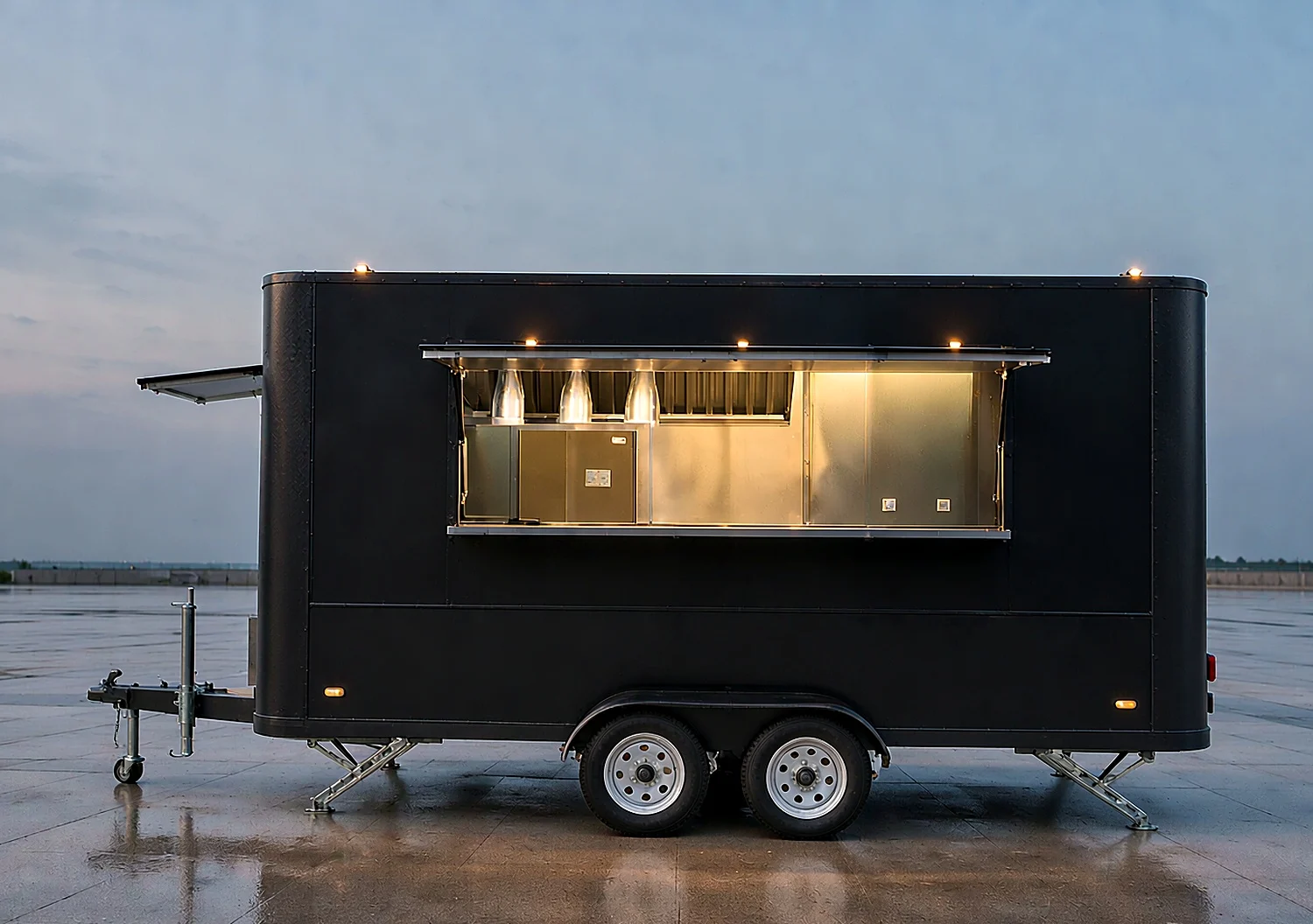
At 2500 x 1600 x 2350 mm the unit goes behind a pickup or an SUV. On site, four jacks go down before the window comes up.
Chassis
- Single axle, twin wheel
- Brakes, reverse and indicator lights
- Seven-pin lighting plug
Hitch
- A-frame with ball coupling
- Boat-style jockey wheel
- One person can hook up
Levelling
- Four jacks with low-effort handles
- Even load at all four corners
- Body stays still against the counter
Body
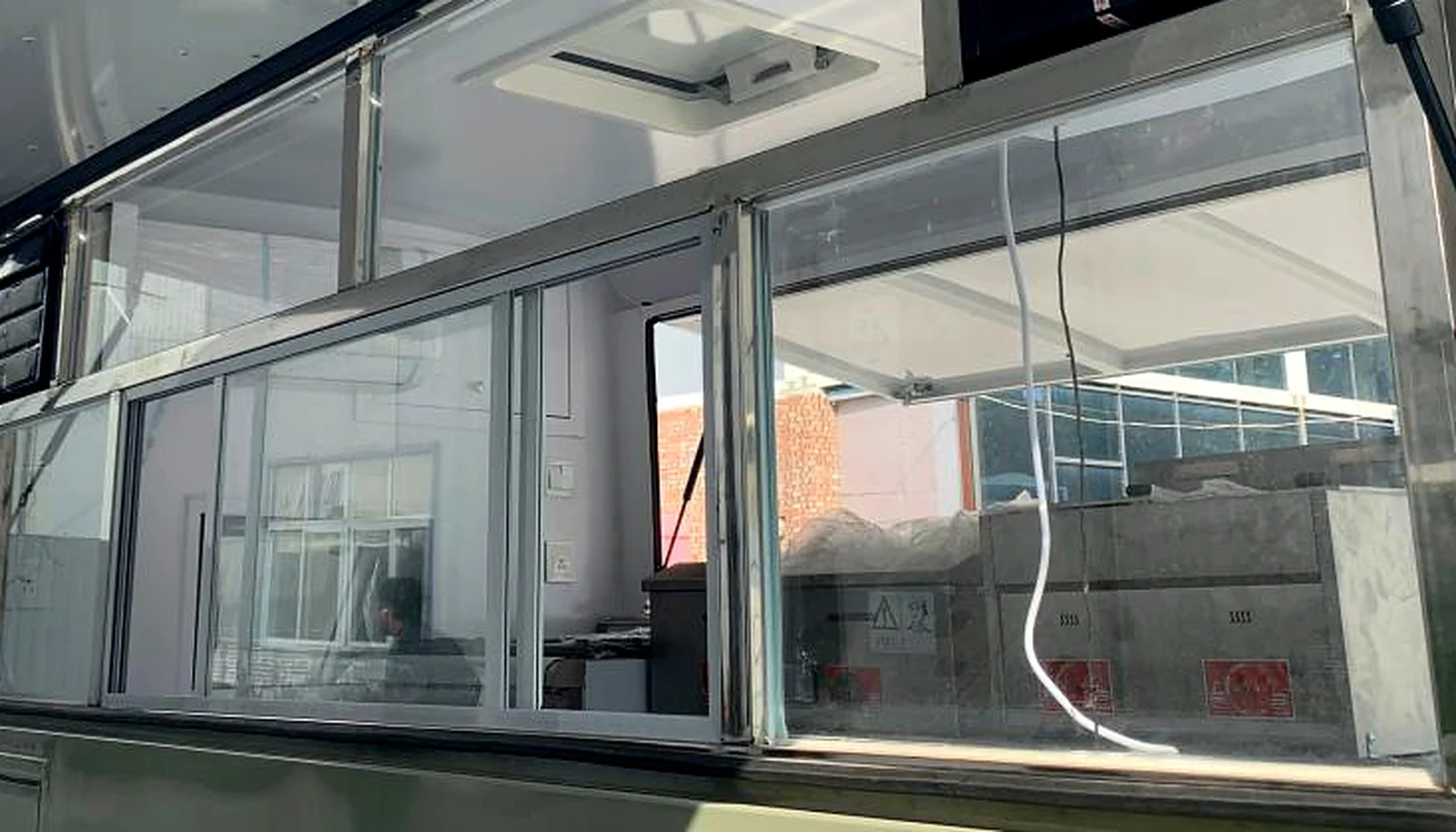
- Full-width flip-up serving window
- Side door 1700 x 720 mm
- Stainless counters and cash drawer
A single axle is what makes it manoeuvrable: corners, parking lots and narrow lanes without three attempts at a turn. The trade-off is that a single axle rocks when parked, which is why the four jacks carry the load once the trailer is in place.
On site the sequence takes ten minutes: unhook and lower the frame with the wheels chocked; crank the four jacks until the body is level; raise the window, plug in and power the fridge first.
From quotation to Houston
One trailer, one port. Every step after the order has a checkpoint the customer can see.
- Drawings — issued three days after deposit; once signed off, they do not change.
- Production — 35 working days, with a progress photo every week.
- Factory test — power on, water pressurised, photographed and filed before the balance is paid.
- Shipping — single unit by LCL to Houston; booking has to line up with the production schedule.
Start from the menu, then the metre
Tell us what you sell in a morning and we will size the trailer around it.
A 2.5 m build is not a compromise if the equipment list is honest. Send us your menu and your site and we will draw the line before you commit.