A Round Nose and a Pizza Room in Three Metres
The brief was a brand, not a menu
He sells a submarine. Our job was to put it on land.
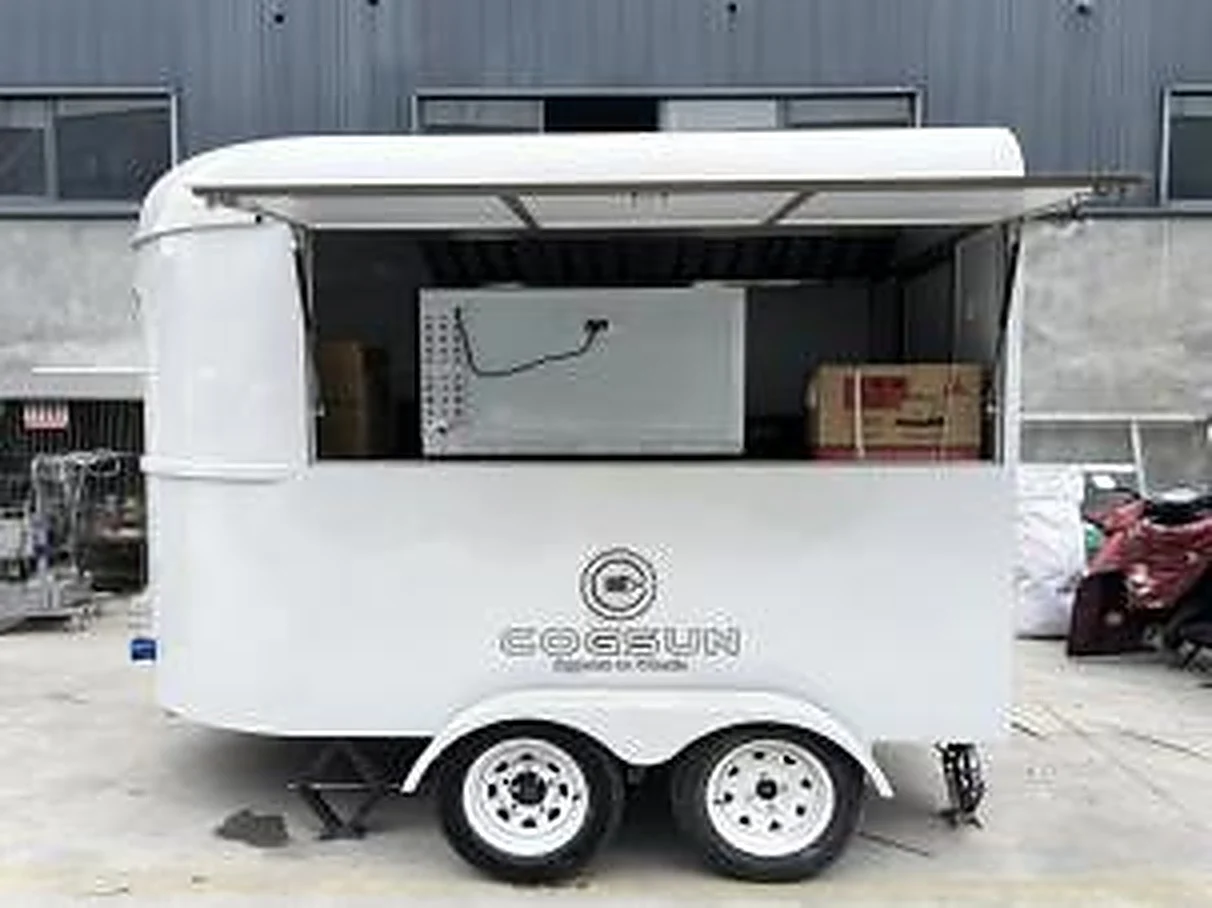
The customer in Bordeaux runs a brand built around the deep sea — logo, palette and slogan all point underwater. He did not want a generic food trailer. He wanted a street-facing version of his own shopfront, so the unit had to look like his from the first sketch.
The menu decided the equipment: pizzas need a double-deck electric oven at 6.4 kW; toppings need cold space, so five salad inserts; drinks and part-prepared stock need chilling, so a 1.2 m under-counter fridge and a single-door bottle cooler. Everything runs on electricity — there is no open flame anywhere on the trailer.
Gas-free was the first decision, and every electrical choice followed from it.
Three metres, one straight line
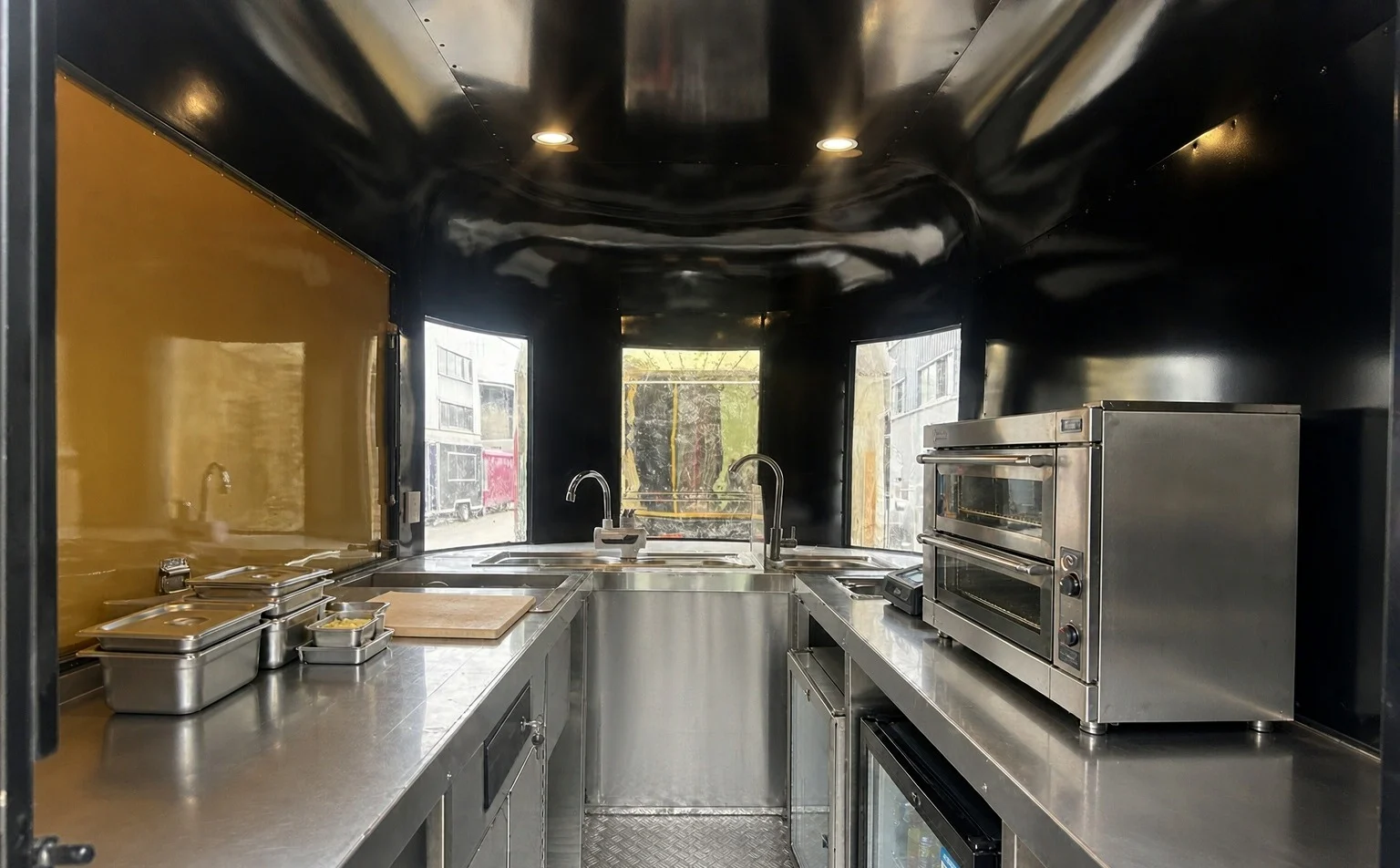
Three metres is not much. Preparing, baking, serving and taking money have to happen at the same time, so the layout is a single line: the operator stands in the middle and both ends are within arm’s reach.
- Preparation and water · nose — three sink bays against the round nose, five salad inserts under the counter, never more than a step away.
- Baking · centre — the double-deck oven faces the flip-up window so trays come out straight onto the counter, with a continuous hood above taking heat away from the customer side.
- Chilling and payment · tail — under-counter fridge and bottle cooler against the wall, cash drawer on the outer edge, so serving and charging do not collide.
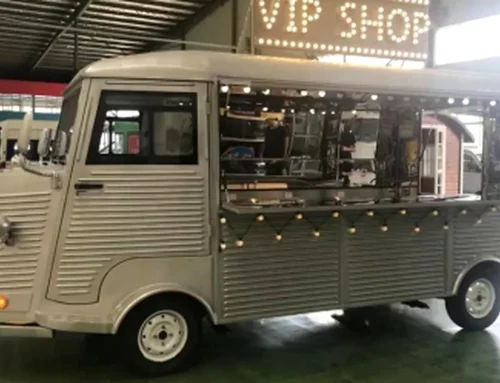
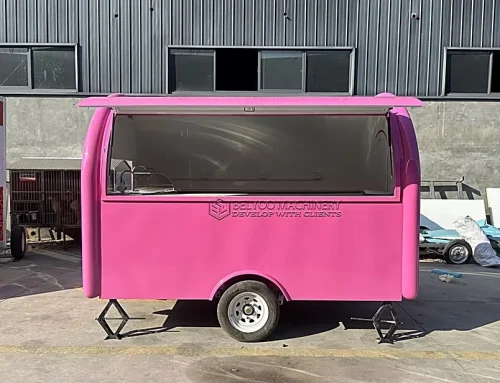
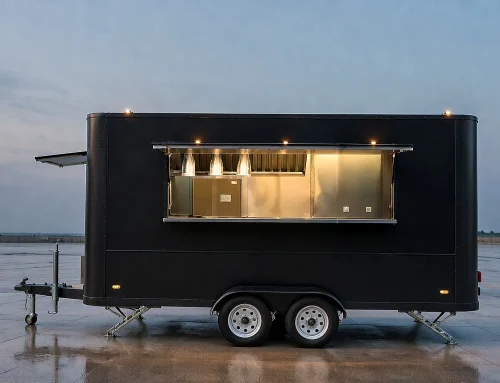
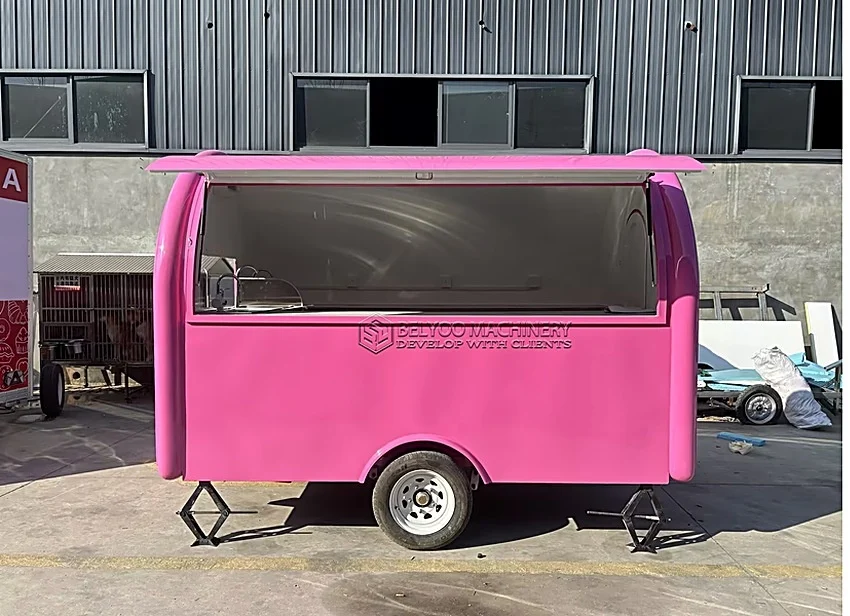
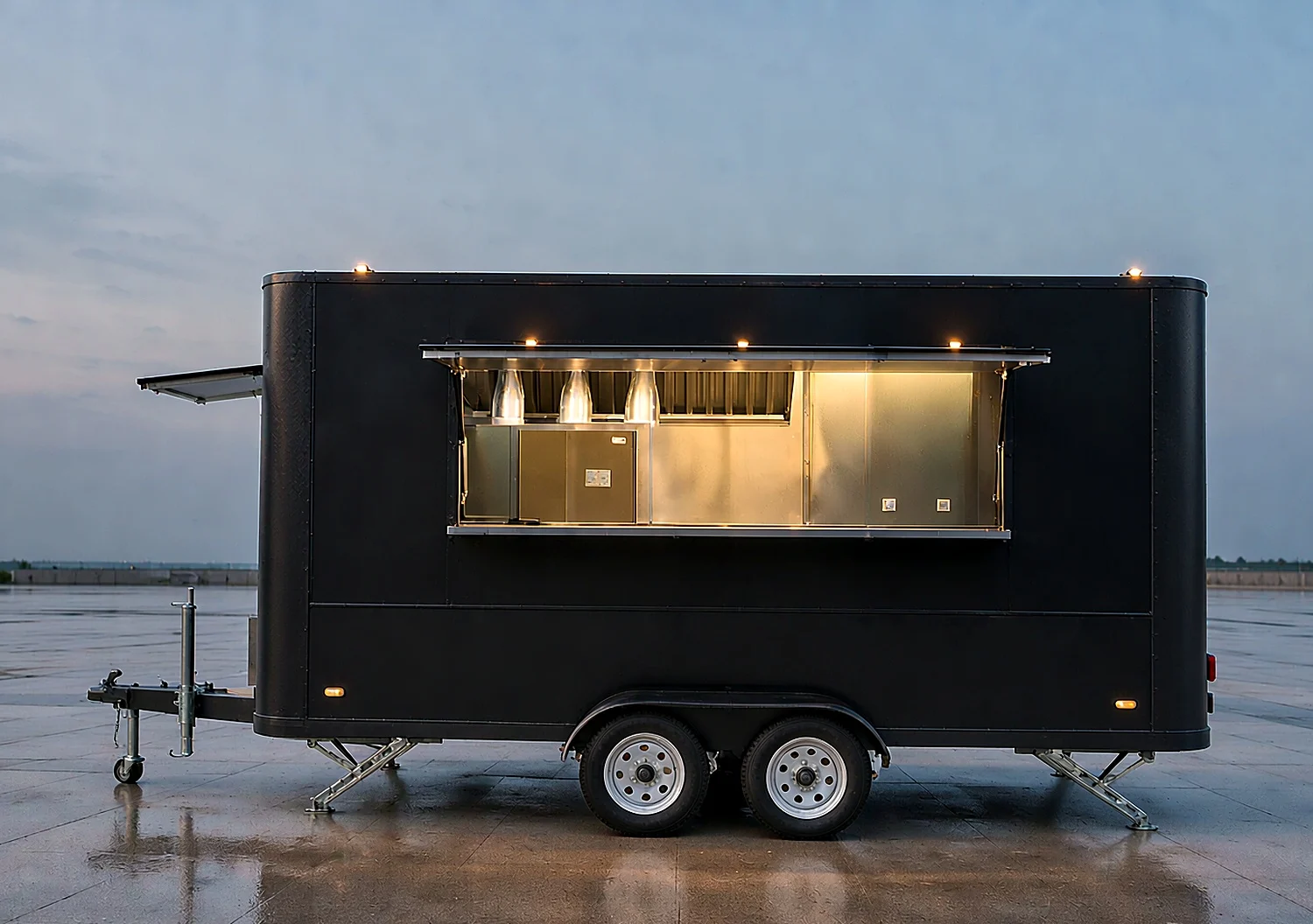
The horse-trailer shape is what makes the street presence work: the nose tapers into a curve, the full side panel lifts into a counter, and at closing it folds back down and the unit is simply a trailer again.
All-electric, so the first drawing was the circuit
With no gas on board, every bit of heat comes from electricity. The first drawing for this unit was therefore not a floor plan but a power plan: where the supply comes from, how many circuits, and what starts first.
The oven is 6.4 kW and draws higher still at start-up; the fridge, cooler, lights and sockets together stay under 1 kW. A 10 kW generator is not chosen to be enough — it is chosen so the start-up margin is already inside the number.
There is also a shore-power inlet: where the market supplies power, plug in and keep the generator as a backup, saving fuel, noise and emissions.
Generator
- 10 kW petrol
- Housed on the nose, rain and noise shielded
- No dependence on site power
Distribution
- 6 mm² main cable
- Four separately fused circuits
- Independent earth leakage per circuit
Priority
- Oven on its own circuit
- Fridge and cooler separate
- Opening the cooler mid-bake will not trip the trailer
Shore power
- One external inlet
- Generator as backup
- Quieter on site
Making it look like a shop
The chassis decides whether it tows steady; the finish decides whether it looks like a shop when parked. The customer did not economise on either.
Chassis
- ALKO axle, brakes and coupling
- Four parking jacks
- European service parts
Body
- Colour custom, no charge
- White base on this unit
- Dark tone kept to one waistline
Wheels and decals
- Four rims painted black
- Two 1000 x 1000 mm decals
- Cut from the customer’s vector artwork
Lighting
- Retro wall lamps 280 x 160 mm
- One pair inside, one pair outside
- Warm light thrown onto the signage
ALKO is the most common running gear on European trailers, so registration, motorway use and local servicing in France need no explanation about a non-standard bolt. The white body is not laziness: it is the space reserved for the customer’s own colours.
What nobody sees
Customers only see the outside. Whether a trailer is still tight, still dry and still odour-free in year three depends on the parts nobody photographs.
Floor
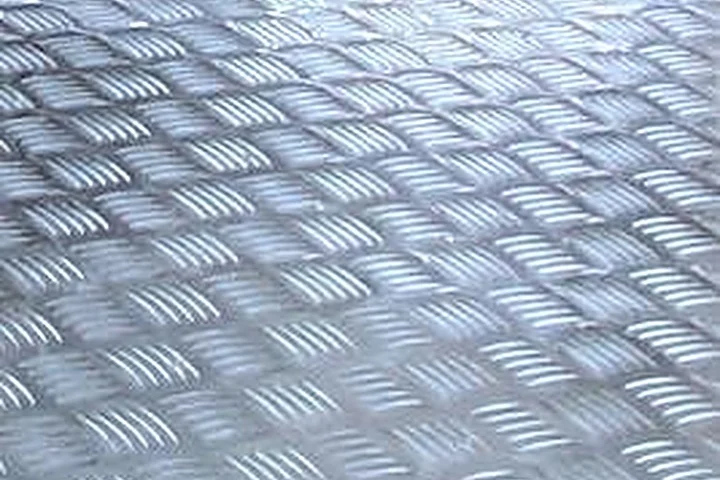
- Checker-plate aluminium, not laminate
- Non-slip when wet or greasy
- Hosed clean at closing
Water
- Fresh tank feeds the sink
- Waste tank takes the drain
- Pump between the two
Wiring
- All joints inside the distribution box
- No exposed terminals in the cabin
- Cables run high and along edges, never on the floor
Storage
- Divided drawers under the counter
- Closed storage for packaging
- Nothing rattles in transit
The tanks are fixed separately with no crossover in the pipework, so the trailer can park where draining to the ground is not allowed. Door frames, window edges and corners are closed with aluminium profile rather than sealant, so rain does not find a gap to sit in.
Visible money buys the look. Invisible money buys the third season.
From order to Fos
One unit, one port, four checkpoints the customer can follow from France.
- Drawings — issued one week after deposit; sign-off locks the build.
- Production report — a progress photo every week.
- Factory test — power on, oven brought up to temperature, photographed and filed before the balance.
- Shipping documents — loading photos plus CI, PL and B/L issued together.
Decide what you sell, then what goes in
A brand-first build only works when the equipment list comes from the menu.
If your identity has to survive the trip to the street, send us the artwork and the menu together and we will design the body around both.