One Trike, One Pizza Menu
What he sells
He does not sell pizza. He sells the flame people can see while they queue.
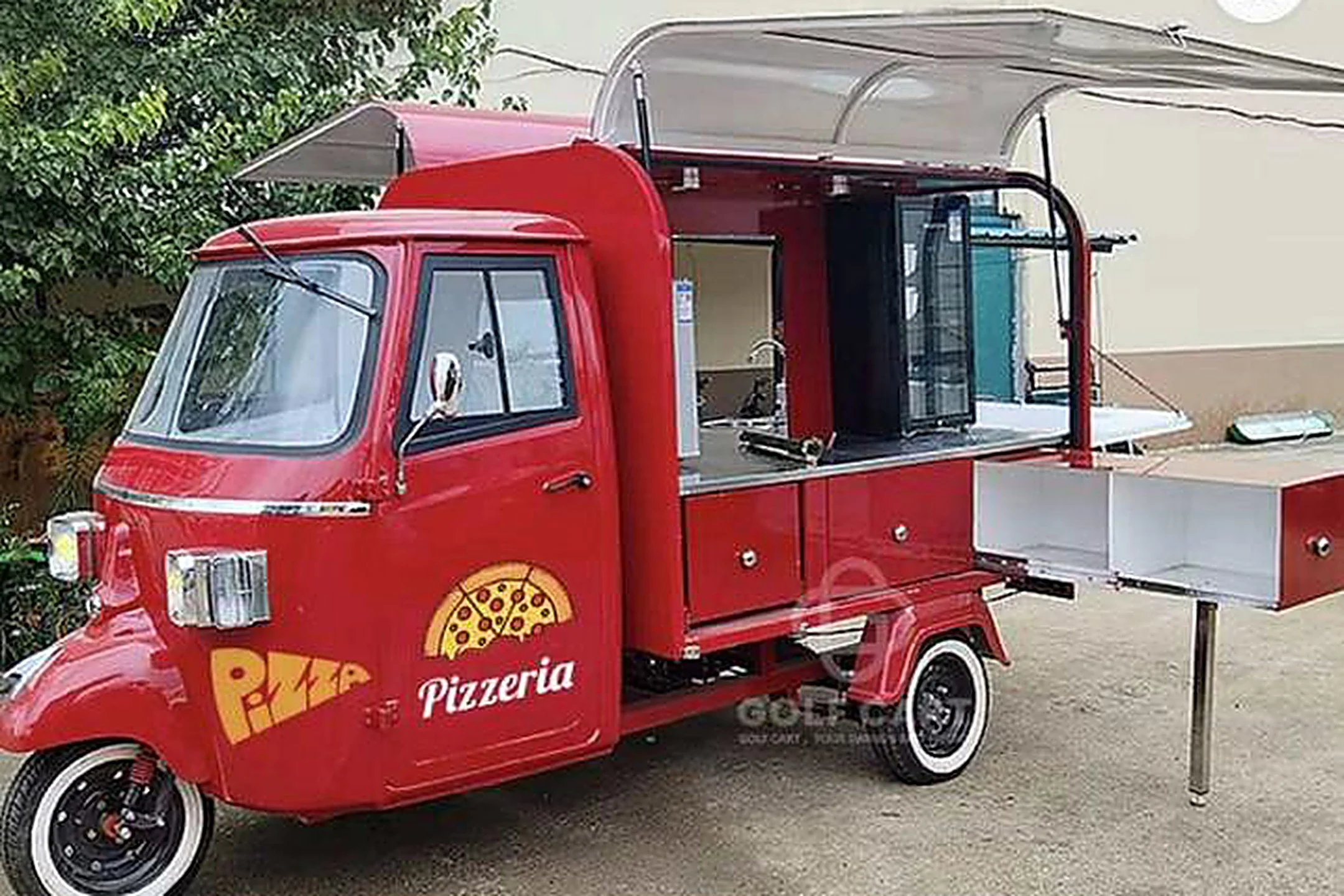
The client runs street pizza in Baltimore, USA. One three-wheeler has to do five jobs at once: bake, refrigerate, serve, take cash and attract people. The vehicle is only 3.5 m long and 1.5 m wide, so every machine needs a position it cannot be moved out of.
This is also the first question we ask on any order: what is your menu? Fix the menu and the equipment is fixed; fix the equipment and the layout can be drawn. Done the other way round, buying the vehicle first and deciding what to sell later, one machine always ends up without a home.
Equipment worked back from the menu
Menu first, equipment second, layout last. This table is that order, read left to right.
Bake
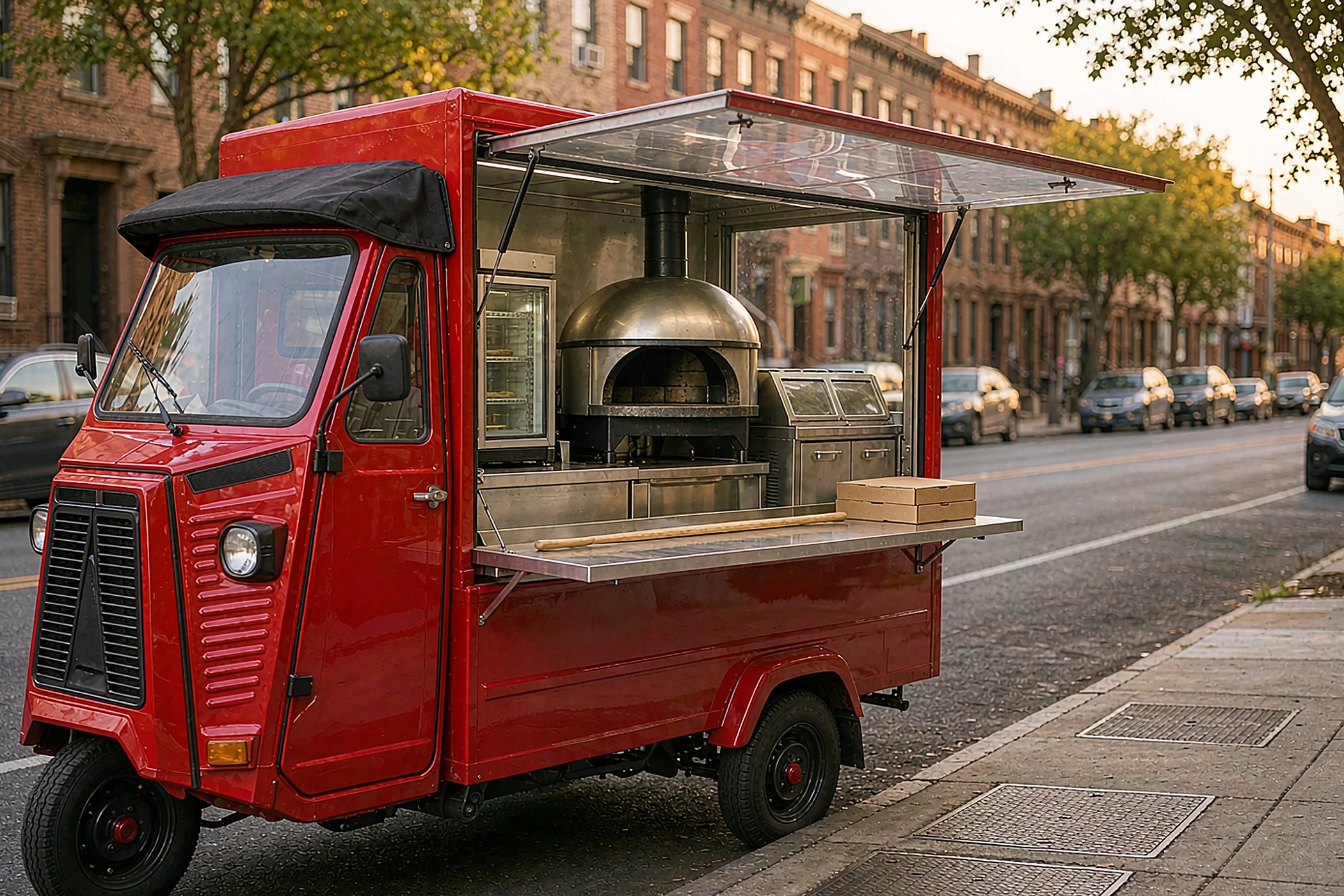
- Gas wood-fired oven, dome chamber 1095 x 610 x 570 mm
- Dome stores heat, four pizzas at a time, chimney straight to the roof
- Oven mouth faces the raised side panel, pizza goes out the same way it comes in
Chill
- Two drawer fridges under the worktop, cheese, sauce and ham on two layers
- Salad fridge 32 kg, 168 W, 1200 x 395 x 435 mm, sliding glass lid
- Display fridge 95 L, 0-10 C, 480 x 490 x 835 mm, facing out at the window
Serve and top up the ticket
- Air fryer 2.6 kW, 595 x 530 x 570 mm, fries and wings while people wait for the oven
- Gas steam table with three pans, 32 x 17 cm each, pre-cooked stock held warm
- 3 plus 1 sink with fresh and waste tanks onboard, plus a 3 x 15 L drinks dispenser
Outside the body
- Folding side board for menus and condiments
- Electronic menu screen, 60 W, 493 x 292 mm, readable in daylight
- LED ceiling light inside, so the cabin is lit after dark
More equipment is not better equipment. The list has eight items and every one of them has to be used daily; the item nobody touches is the item that wasted its space. On this build the equipment cost nearly matched the vehicle cost: the body is the shell, the equipment is the business.
The vehicle is equipment too
A three-wheeler is flexible: 1.5 m wide, fits a car space, turns into an alley. The weakness is speed, so this build was upgraded.
Chassis and power
- Piaggio base, 3500 x 1500 x 1900 mm
- Battery carried on the vehicle, top speed raised from 21 to 29 mph
- The extra 8 mph is not for racing, it is for being willing to use main roads, which decides which part of the city the business can serve
Body and working surfaces
- Colour to order, side panel lifts into a counter
- All stainless worktops, two pull-out surfaces included
- Rear door opens upward, so it does not block the pavement when trading
- LED ceiling light, sockets inside and out, power for the menu screen
- PIZZA decals shipped with the vehicle, a set of ten
Two units, one shipment
Quoted on 13 July for two identical units in the same batch. From drawing to shipment there are only three steps.
- Drawing sign-off. Drawings after deposit, locked once confirmed.
- Weekly production report. One progress photo every week.
- Factory acceptance. Power on, water pressure tested, photographed before the balance.
- Shipping documents. CI, PL and B/L in one handover, sea freight to Baltimore.
Two identical units in one shipment means one drawing round, one customs entry and one spare-parts set. For a client starting with a small fleet, that is less work than taking one unit now and following up with a second later.
Belyoo / Street food cases
Menu first, equipment second, vehicle last.
Send us the menu you actually plan to sell. We will tell you which of it fits, and which of it belongs on a second unit.