An Old Outline with Today’s Kitchen
Memory on the outside, throughput on the inside
A retro truck sells on the first glance. Whether people come back depends on how fast the food comes out.
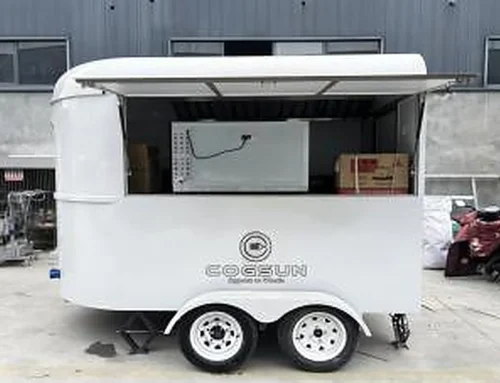
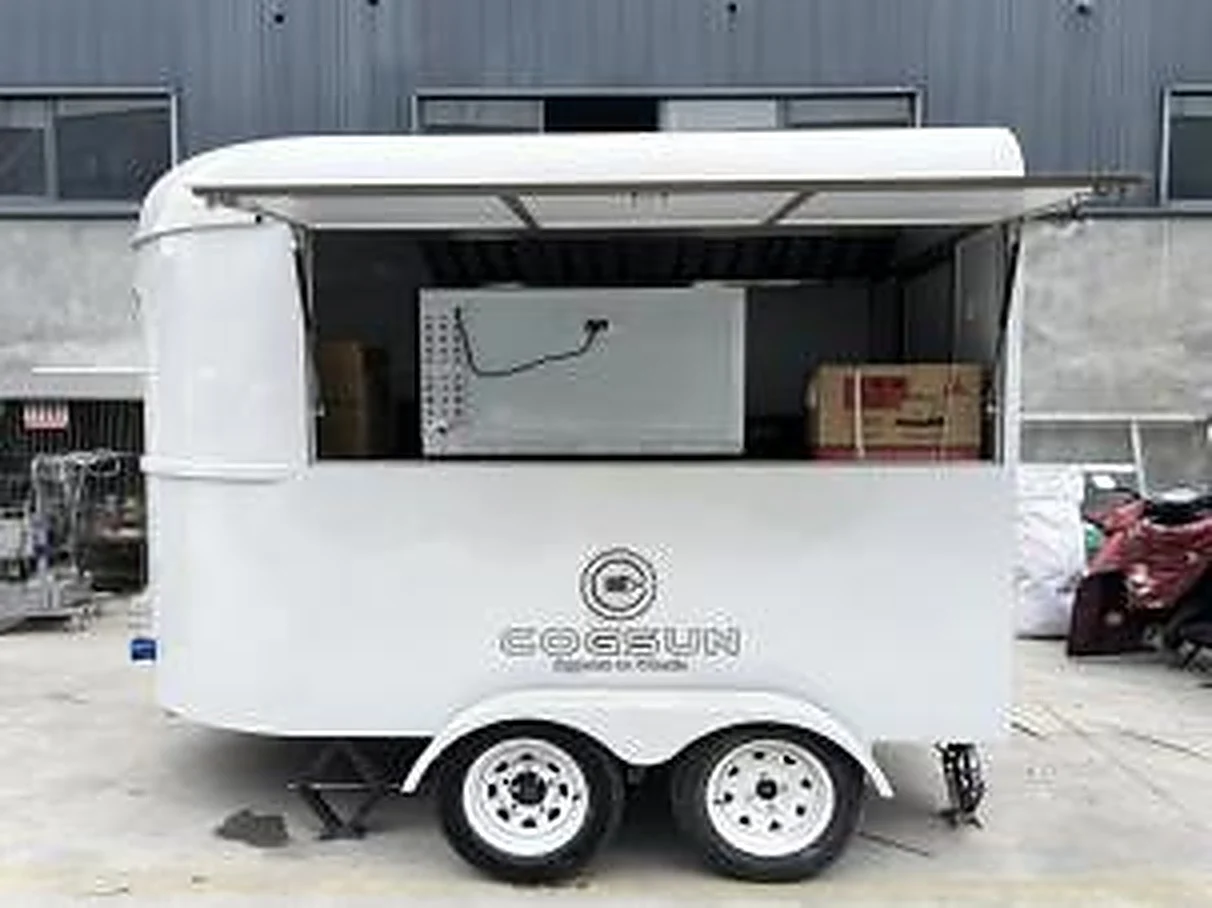
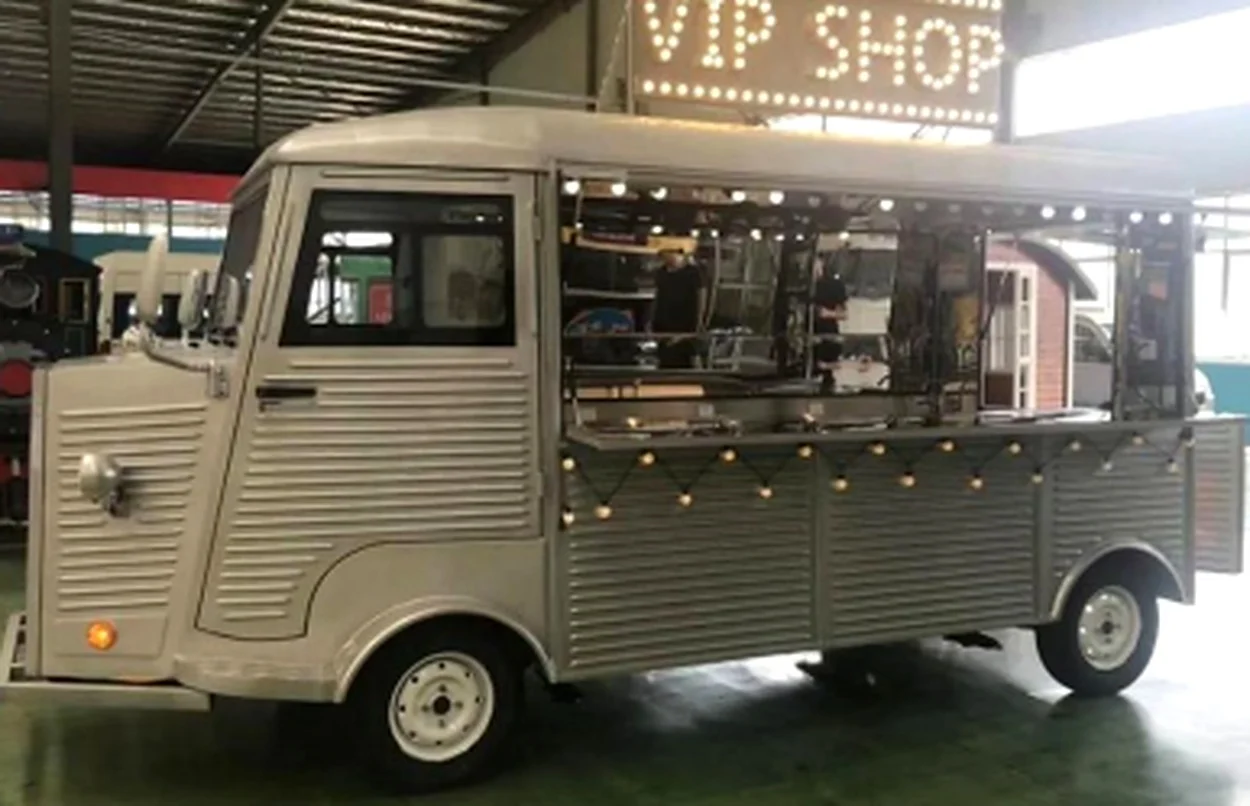
The customer in Rotterdam ordered a 4.8 m retro electric food truck. The body follows the Citroën H outline — corrugated panels, arched roof, round lamps — because that silhouette makes people turn their heads on the street.
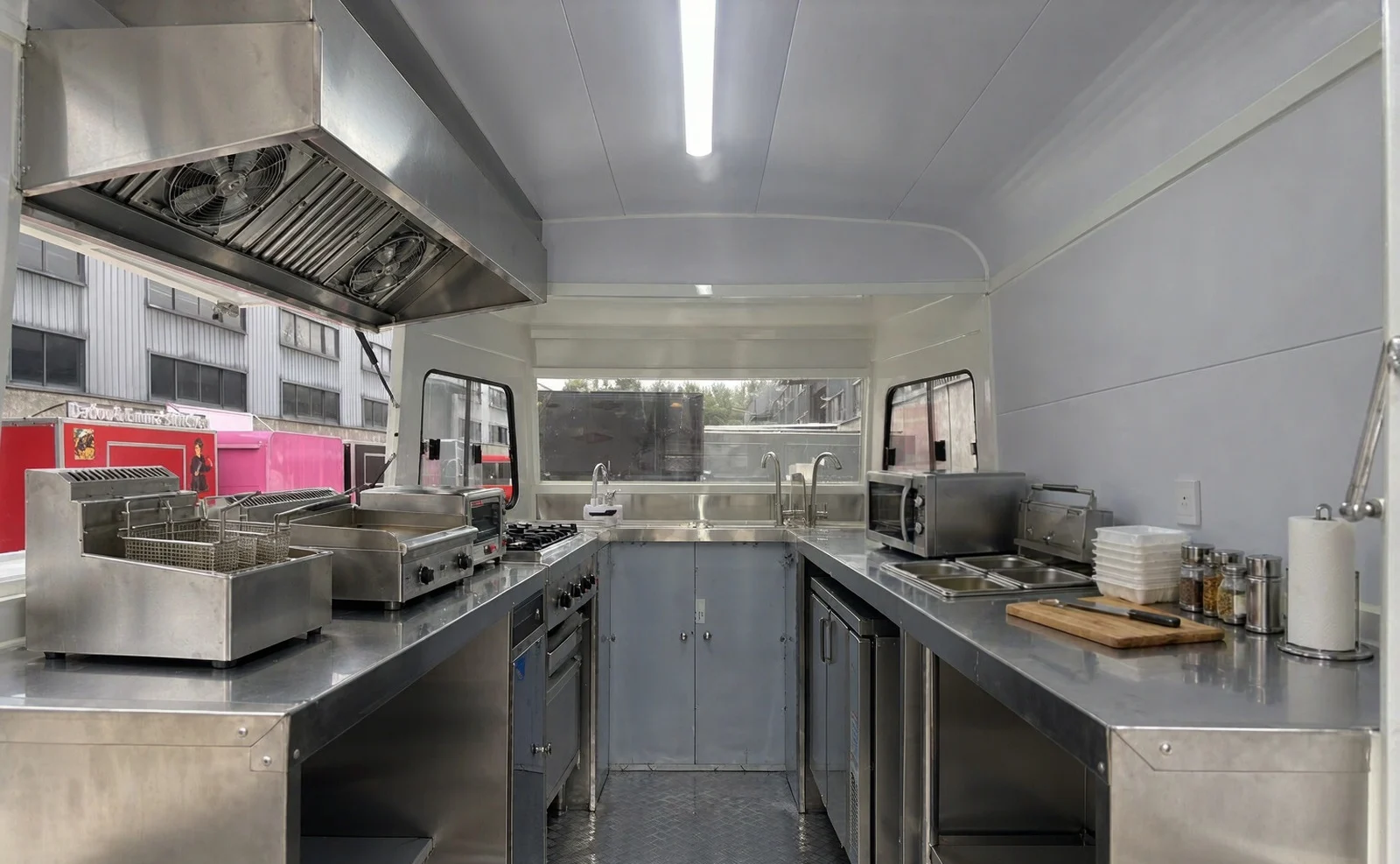
Inside, though, is a complete hot kitchen: a 12 L twin fryer, a gas griddle, an electric oven and a two-burner gas hob, plus a 1.5 m double-door under-counter fridge and three metres of worktop. From breakfast toasties to late-night fried food, nothing has to be swapped out during the day.
The exterior is designed for people walking past. The equipment is designed for people standing in a queue. They were planned separately: the shell borrows a mid-century outline, the inside follows today’s service pace.
How 4.8 m is arranged
A 4800 x 2000 mm floor is 400 mm wider than a box body of the same length, which is exactly enough to run two columns: equipment against one wall, worktop at the window, one person’s width of aisle between them.
- 1.35 m · front, wash — twin sinks with hot and cold water; fresh and waste tanks under the counter; hands are washed on the way in.
- 2.20 m · middle, fry and grill — the 12 L fryer and gas griddle side by side beneath a 2.5 m hood.
- 1.05 m · rear, hob and oven — two gas burners and the electric oven: hot drinks, hot soup, baked dishes all land here.
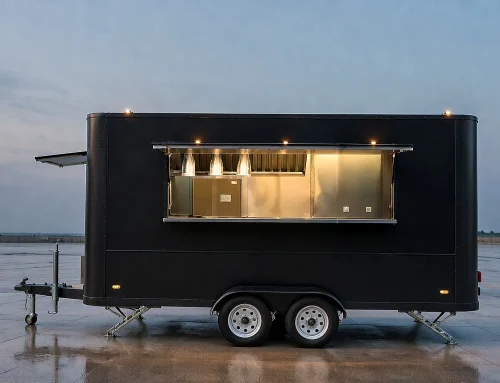
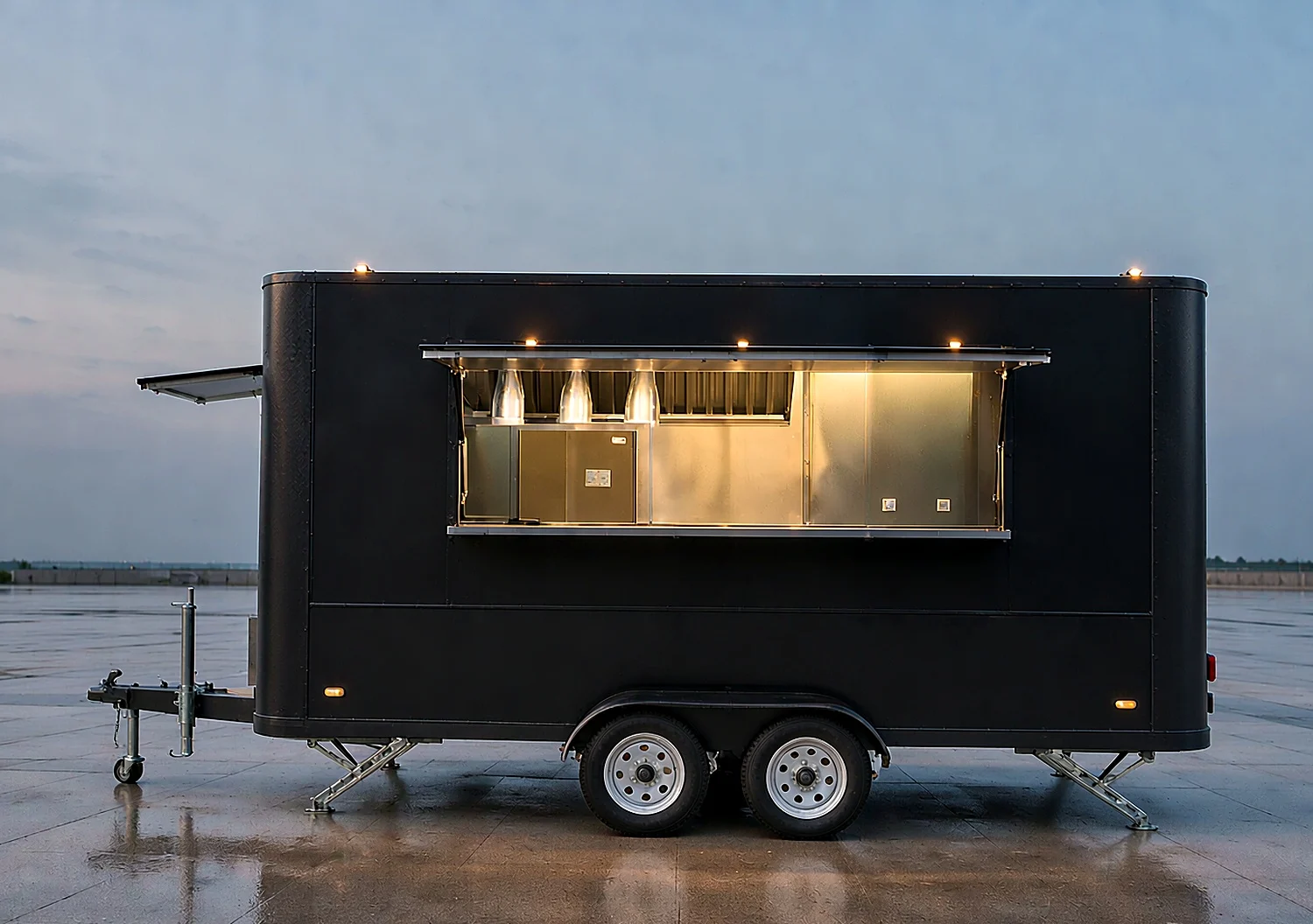
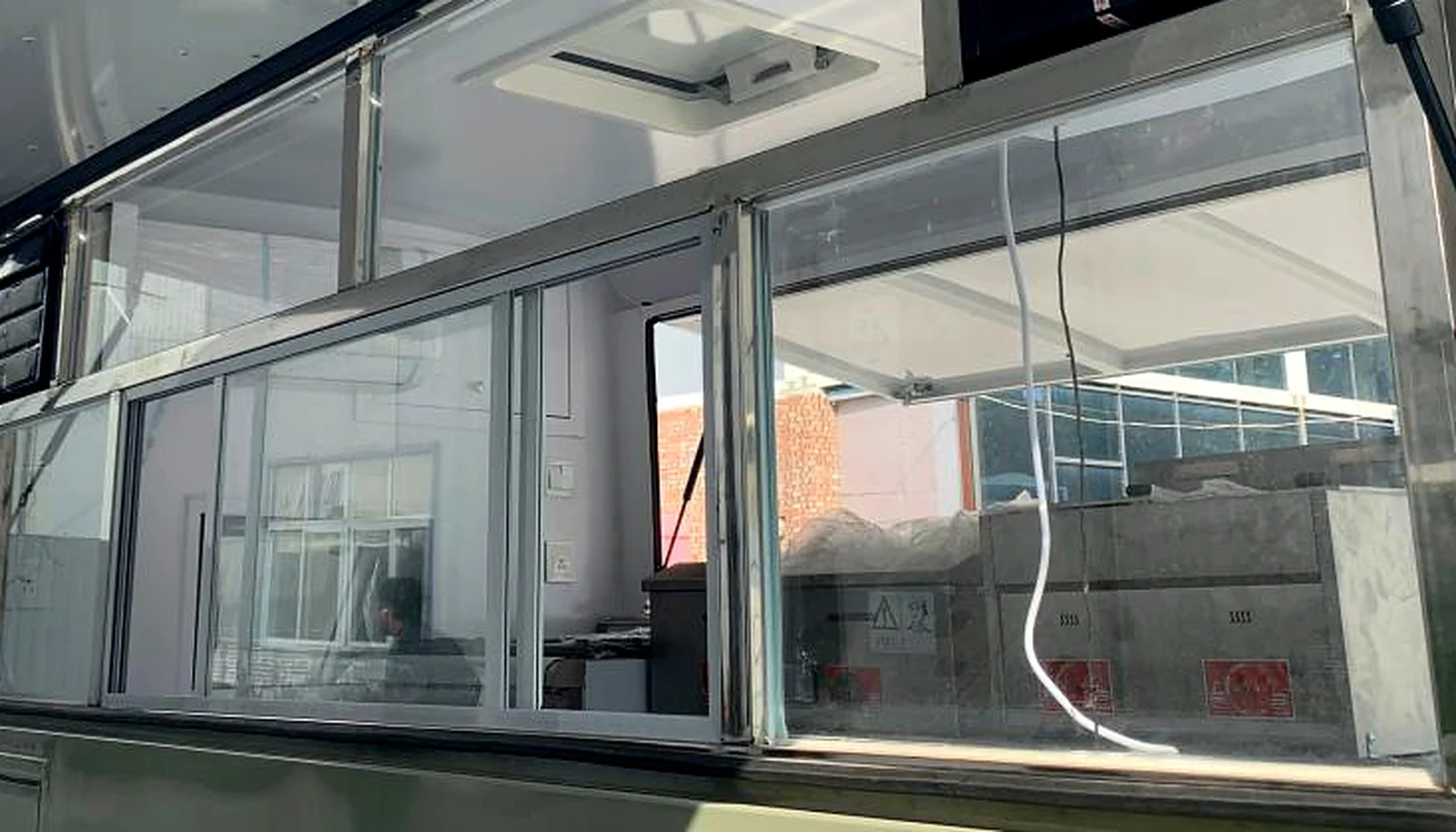
The window runs along the long side with a fold-out counter extending 300 mm, so guests have somewhere to rest an elbow and staff do not have to lean out to hand food over.
Three shifts in one day: breakfast from seven to eleven, with the oven on toasties, the hob boiling water and coffee, the griddle doing eggs; lunch from eleven to fifteen with fryer and griddle together for fries, chicken and flatbreads; evening from seventeen to twenty-two with the lamps on, mostly fried food, the oven holding temperature and the hob keeping soup hot.
The aisle is one person wide because inside the cabin only one person needs to turn around.
Stand inside to understand the turning
Four units run along one wall and the worktop runs the length of the other — a layout only a two-metre-wide body allows. One person standing in the aisle fries with the left hand, plates with the right, turns and hands through the window: three steps, no more.
Fryer · 570 x 550 x 350
- 12 L, two tanks, two baskets
- One frying while the other drains
- Drain valve for oil changes without stripping the unit
Griddle · 750 x 470 x 210
- Smooth left, ribbed right
- Eggs and pressed sandwiches separated
- Open gas flame, fast heat
Oven · 3000 W
- 220–240 V, 50–350 °C
- Two trays
- Baking, warming and holding
Hob · 780 x 480 x 800
- Two burners, lit together
- Stock pot on one side
- Coffee pot on the other
All the equipment shares one column because heat and fumes have to be handled in one place: the 2.5 m hood covers the fryer and griddle with two extraction fans pulling to the outside, while the hob and oven sit beyond the hood and vent separately.
The other column carries no equipment at all — only actions: cut, plate, wrap, hand over. Under the worktop are sliding-door cabinets holding preparation boxes, packaging and oil, so the surface only ever shows what is in use.
Six items, each with a place
The list is short, but every item has to find its own position on board.
Only the oven is electric; everything else burns gas. That is why a 5 kW generator is enough: the oven takes 3 kW, and lights, pump and sockets fit inside the remaining headroom.
The three-metre worktop and the 1.5 m fridge were calculated backwards from a day’s service: three preparation boxes side by side, two cases of packaging and a till all fit on the surface, and the fridge holds a full day of raw stock so nobody walks back to a cold store mid-shift.
The fridge is an under-counter unit, set beneath the worktop so stock is reached without bending into a cabinet; the fryer and griddle sit on the counter with their connections running downwards, so no pipework is visible above.
Equipment is not about quantity. It is about every unit being used and having somewhere to live.
Water onboard, power onboard
This truck connects to neither mains water nor site power: the water travels with it and the electricity is generated on board. Find a patch of ground where it can park, start the generator, and the burners light.
Water
- One fresh tank, one waste tank
- Twin sinks with hot and cold taps
- Wash, rinse and sanitise in one run
Power
- 5 kW petrol generator, 25 L tank
- Breaker box splits lights, sockets, pump and oven
- Mounted on a fixed frame at the rear
Lighting
- LED strip on the ceiling
- Switch at the entrance
- Ring of roof lamps for the evening facade
Gas
- Fryer, griddle and hob share one supply
- Connection below the counter
- Bottle changes without removing equipment
The generator sits on a fixed frame at the rear with the exhaust facing out and clearance for cooling; the fuel filler is reached through a service door in the side, so the machine never has to be lifted down.
Tank capacity is sized to a day: two tanks full cover a full day of dishwashing, and the waste tank is emptied before closing and refilled the next morning. A 25 L tank does not run dry inside one shift, so there is no refuelling stop mid-service.
Before shipping, the whole unit is run once: tanks filled, pump on, taps running, drain not backing up; generator started, oven brought to 250 °C, lights on, sockets live, every breaker switched individually. Filmed for the customer, then released for shipment.
From the workshop to Rotterdam
The 4.8 m body ships as a full container load, about forty days at sea to Rotterdam. Inside the container the body, the fold-out counter and the hood are each lashed on timber frames, so the unit can be opened for business soon after landing.
- Drawings — after order: layout, palette and window position settled in one pass, then production starts.
- Production — five to eight weeks depending on specification, with photos and video at key points.
- Test — power, water and gas checked item by item, filmed inside and out for remote sign-off.
- Shipping — full container, timber frames, CI, PL and B/L with the goods.
Whether a retro truck is right is not a matter of opinion: read the drawing, watch the test, and see whether it can trade on the day it lands.
A shape people remember, a kitchen that keeps up
Bring the silhouette you want; we will put a working kitchen inside it.
Send us the look you are after and the menu you actually serve, and we will lay out the four metres in between.